The single most useful question you can ask before buying luxury loungewear isn't "which brand?" It's "what will I actually be doing in this?" The fabric is the decision. Silk, cashmere, merino wool, and premium cotton each behave differently when you're asleep, on a video call, or moving around the house—and matching the material to the activity is what separates a purchase you live in from one that hangs in the closet.
Understanding Luxury Loungewear: More Than Just Comfort
Here's the distinction that matters. Luxury loungewear isn't just soft clothes. Writing for Condé Nast Traveller, Charley Ward noted that "gone are the days when cosy equated to frumpy"—the category has matured into considered garments where comfort, style, and function are deliberately balanced. Natori, a brand that designs in this space, describes its lounge collection as pieces that "transcend traditional basics," pairing soft fabrics with relaxed fits for year-round wear.
What separates luxury loungewear from the athletic wear many of us default to at home? Lotus Linen's editorial team points to rare materials, intricate design techniques, and what they call a complex interplay of material engineering and physiological responsiveness—in other words, the garment is designed around how your body actually feels over hours of wear, not just how it looks for ten minutes.
Beauty Pillow's style guide adds a practical lens: quality pieces feature "thoughtful details like reinforced seams, hidden pockets, and flattering silhouettes," with brands that prioritize fit across different body types. That's the frame for everything that follows. This distinction reflects how these sources describe the category, not a universal definition—but it's a useful one.
The Fabric of Your Lifestyle: Matching Materials to Activities
Now the core question: which fabric for which life? Seamwork's fabric guide, written for home sewists but grounded in fiber behavior, organizes loungewear fabrics by exactly this logic—sleep, work from home, and active lounging are different demands.
For sleep, cotton-family fabrics dominate the guidance. Seamwork highlights seersucker, a cotton weave that regulates temperature, and recommends lightweight versions; double gauze is called "a treat for sleep because it is so soft against the skin," while cotton lawn or voile offers a softer drape. Linen, meanwhile, works as a versatile layer—Seamwork notes it can keep you warm when needed, making a linen day robe or lounge pant surprisingly flexible.
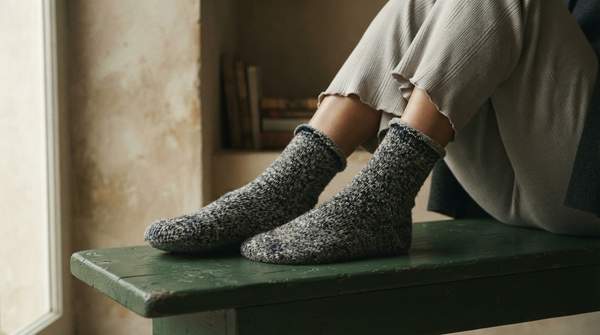
For movement, merino wool stands out. Seamwork describes merino as "an alternative to many performance fabrics because it wicks moisture and has anti-microbial properties." A technical comparison from SELVANE goes further, placing merino's moisture-wicking, temperature-regulating, and odor-resistant properties at the standard for high-performance apparel. Both merino and cashmere tend to work well even for sensitive skin, according to Ridge Merino's comparison—though the same source sensibly suggests trying both, since everyone's skin reacts differently.
Cashmere is the softness champion. Oats & Rice's fabric comparison notes that even wool from young sheep "can't match the fine, fluffy texture of true cashmere," while acknowledging it's less durable than wool—good care keeps it beautiful for years. Traveller's writers and editors, when prioritizing travel loungewear, reach for cashmere co-ords. Silk, finally, brings its luxurious feel and natural-fiber breathability; Beauty Pillow groups silk blends with organic cotton and cashmere as natural fibers offering superior comfort and breathability compared to synthetics.
Luxury Loungewear Fabric Decision Framework
Use this table to move from "I want nice loungewear" to a specific material choice. Each row maps a fabric's documented properties to the home activities those properties serve best, so you can identify your primary activity and read across to your answer.
| Fabric | Key Properties | Best For | Trade-off to Weigh |
|---|---|---|---|
| Premium cotton (seersucker, double gauze, lawn) | Temperature-regulating; double gauze notably soft against skin; lawn and voile offer soft drape | Sleep and deep relaxation | Seamwork recommends checking weight—lighter seersucker suits sleep better |
| Linen | Breathable woven; can keep you warm when needed | Versatile layering—lounge pants or a day robe across activities | Seamwork flags lint and wrinkles as considerations for work-from-home wear |
| Merino wool | Wicks moisture, regulates temperature, resists odor | Active lounging and light chores where you warm up and cool down | Seamwork advises rubbing a swatch against your skin first to confirm it isn't itchy for you |
| Cashmere | Exceptionally fine, fluffy softness; signature luxury hand | Quiet, low-movement relaxation—reading, resting, slow evenings | Less durable than wool per Oats & Rice; longevity depends on good care |
| Silk and silk blends | Luxurious feel; natural-fiber breathability | Layering into a comfort ecosystem—accessories and accents alongside other pieces | Best treated as a complement to your core set rather than the workhorse fabric |
The reasoning behind the mapping is straightforward: sleep rewards softness and temperature regulation with no abrasion concerns; active hours reward moisture management and odor resistance; and still, quiet time rewards maximum tactile softness, where cashmere's fineness wins. Lotus Linen frames the same logic from the buyer's side—people under stress benefit from moisture-wicking, temperature-regulating fabrics, while those with sensitive skin should prioritize gentle natural materials.
Beyond Fabric: Key Design Elements of Luxury Loungewear
Fabric gets you halfway. Construction gets you the rest of the way, and it's where price differences become visible. Look first at seams: reinforced seams are one of the concrete details Beauty Pillow's guide names as elevating a simple design into something sophisticated.
Then look at silhouette and fit. Natori emphasizes "graceful silhouettes" and relaxed fits designed for function across the year, while Beauty Pillow notes that quality brands prioritize fit across different body types. A garment that fits well in a relaxed silhouette moves with you from couch to kitchen without pulling or bagging.
Finally, look at finishing and functional details. Hidden pockets, subtle design elements, and what Lotus Linen describes as "intricate detailing that suggests artisanal craftsmanship" are the markers that a piece was designed rather than merely produced. Their editorial frames these attributes as the difference between superficial purchasing and investing in loungewear that genuinely enhances daily life. None of these details require a famous label—just a close look at the garment in your hands.
Making Your First Luxury Loungewear Investment
Begin your luxury loungewear collection by choosing one versatile, premium set in a neutral color that aligns with your most frequent at-home activity, then gradually expand with complementary pieces. That's the low-risk path: one set, matched to how you actually spend your evenings, in a neutral that layers with everything you add later.
Concretely: if your evenings are mostly reading and winding down, start with cotton double gauze or a cashmere-accented set. If you're up and down—chores, kids, kitchen—merino's moisture-wicking behavior earns its price first. If you work from home and want a loungewear vibe on calls, Seamwork's advice is to weigh appearance alongside wearability, which points toward linen blends and structured knits.
The measurable indicator that your first piece was the right choice: the reader will observe increased comfort and confidence in their at-home attire, and a reduced need to change clothes when transitioning between relaxation and light tasks. If you're reaching for something else every time you move from the couch to a chore, the fabric-activity match was wrong—and the framework above tells you which row to try next.
Sources
- Upgrade your airport uniform with these 14 luxury loungewear brands that are actually worth the hype — CN Traveller
- Women's Luxury Loungewear Clothing — NATORI
- Top Luxury Loungewear Attributes Every Buyer Should Know — Lotus Linen
- How Luxury Loungewear Elevates Everyday Comfort and Style — Beauty Pillow
- A Guide to Loungewear Fabrics and Patterns — Seamwork
- Cashmere vs. Merino Wool: A Technical Comparison — SELVANE
- Cashmere vs. Merino Wool: Luxurious Fabrics — Ridge Merino
- Cashmere vs Cotton, Wool, and Other Fabrics • Oats & Rice — Oatsandrice