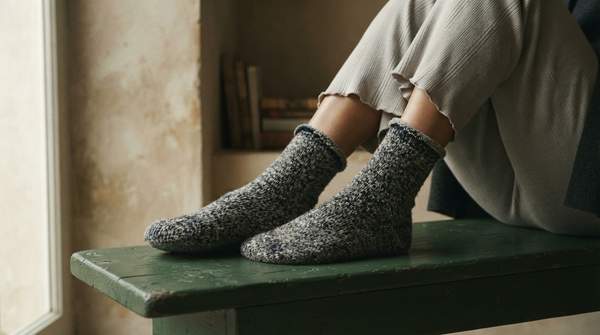
Despite growing eco-consciousness, virgin polyester and acrylic, prevalent in countless 'cozy' garments, remain environmental offenders, shedding microplastics with every wash. These materials contribute significantly to oceanic pollution and textile waste. Consumers increasingly equate luxury with green and ethical production, yet many widely used fabrics still bear a substantial environmental cost, even when marketed as sustainable. This disconnect demands a reevaluation of premium quality, where values now intertwine with aesthetics and comfort, according to Vocal Media. The market will increasingly reward brands transparently prioritizing truly sustainable natural fibers and ethical supply chains, while problematic synthetics face growing scrutiny and potential obsolescence.
1. The New Gold Standard: Top Sustainable Luxury Fabrics
1. Organic Cotton
Best for: The everyday eco-conscious minimalist seeking comfort and versatility.
Organic cotton grows without synthetic pesticides or GMOs, using natural soil management. Rain-fed cultivation can reduce water use over 90%, according to GotApparel, making it a truly low-impact choice.
Strengths: Biodegradable, non-toxic, reduced water use | Limitations: Can wrinkle, conventional still water-intensive | Price: Accessible luxury
2. Linen
Best for: The discerning individual valuing breathable elegance and natural texture.
Linen, from flax, is a low-impact fabric needing no pesticides and minimal water, states The Guardian. Its strength ensures durable garments, making it a sustainable investment.
Strengths: Highly durable, moisture-wicking, minimal resource input | Limitations: Prone to wrinkling, can be stiff | Price: Mid-range luxury

3. Wool
Best for: The sophisticated consumer prioritizing warmth, durability, and natural resilience.
Wool is an environmentally sound natural fiber, according to The Guardian. Its natural crimp offers excellent insulation and moisture-wicking, aligning comfort with ecological responsibility.
Strengths: Excellent insulation, breathable, odor-resistant, renewable | Limitations: Can be itchy, requires careful washing | Price: Premium luxury
4. Silk
Best for: The connoisseur of refined comfort and lustrous drape, valuing investment pieces.
Silk offers softness, gloss, durability, and breathability. The U.S. market, valued at USD 5,225.5 million in 2025, is forecasted to reach USD 8,509.0 million by 2034, growing at a 5.57% CAGR, per Vocal Media. The U.S. market's growth to USD 8,509.0 million by 2034, at a 5.57% CAGR, underscores silk's enduring appeal as a luxury staple, amplified by its natural credentials.
Strengths: Hypoallergenic, temperature-regulating, luxurious feel | Limitations: Delicate, special care, animal welfare concerns | Price: High luxury
5. Semi-synthetic Viscose (Tencel/EcoVero)
Best for: The modern consumer seeking a silky drape with improved environmental credentials.
These advanced viscoses are less carbon and water intensive than regular viscose, states The Guardian. Sourced from sustainable wood pulp, they provide a smooth, breathable fabric with a significantly reduced environmental footprint.
Strengths: Soft, breathable, drapes well, sustainably sourced | Limitations: Chemical processing, not fully natural | Price: Mid-range luxury
6. Recycled Polyester (rPET)
Best for: The pragmatic consumer prioritizing waste diversion and durability in functional items.
Recycled polyester, from post-consumer plastic waste like PET bottles, diverts plastic and reduces energy use, according to GotApparel. However, it still sheds microplastics when washed, indicating an incomplete environmental benefit despite waste diversion.
Strengths: Diverts plastic, reduces energy use | Limitations: Sheds microplastics, not biodegradable | Price: Accessible to mid-range
2. Beyond the Hype: Understanding Fabric Impacts
Fabric sustainability demands a closer look at the complete lifecycle. Virgin polyester and acrylic, common in 'cozy' garments, are among the worst offenders for microplastic shedding and carbon footprint, according to The Guardian. Consumers must understand the inherent environmental footprint of their material choices.
| Fabric Type | Primary Environmental Impact | Microplastic Shedding | Biodegradability | Resource Intensity |
|---|---|---|---|---|
| Organic Cotton | Reduced pesticide/water use | No | Yes | Low (rain-fed) to Moderate |
| Linen | Minimal water/pesticide use | No | Yes | Very Low |
| Wool | Land management, methane (if not responsibly sourced) | No | Yes | Moderate (renewable) |
| Silk | Sericulture practices, water use | No | Yes | Moderate |
| Semi-synthetic Viscose (Tencel/EcoVero) | Chemical processing, deforestation risk (if not certified) | No | Yes | Low (closed-loop) |
| Recycled Polyester (rPET) | Microplastic pollution, energy for recycling | Yes | No | Low (repurposing waste) |
| Virgin Polyester/Acrylic | High carbon footprint, microplastic pollution | Yes | No | High (fossil fuels) |
3. Investing in a Conscious Closet
By Q4 2026, brands heavily reliant on virgin polyester and acrylic will likely face intensified consumer scrutiny, with sales reflecting a growing preference for genuinely sustainable alternatives that offer long-term value.
4. Your Sustainable Fabric Questions Answered
How do certifications like GOTS impact fabric sustainability?
GOTS provides third-party verification that textiles use organic fibers and responsible manufacturing. GOTS's third-party verification assures consumers the entire supply chain meets stringent ecological and social criteria, offering higher trust than unverified claims.
What care practices extend the life of sustainable luxury garments?
Extend garment life with gentle care: cold water washes, air-drying, and eco-friendly detergents. For delicates like silk and wool, hand washing or professional eco-dry cleaning preserves integrity, minimizing environmental impact.