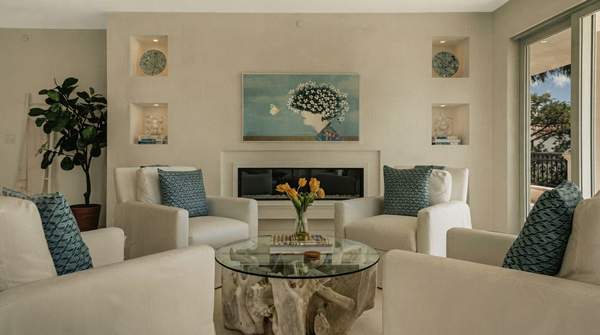
Slow living is a philosophy of intention, not a mandate to move at a crawl. Writers who define the approach describe it as living with greater awareness and less pressure, aligning your days with what you actually value rather than filling every moment. Applied to your home, that means designing spaces and routines around presence and quality — a reading nook, an unhurried breakfast, a purchase you actually considered — without abandoning technology, moving to the countryside, or owning a specific number of things.
Understanding Slow Living: More Than Just Slowing Down
The most common misconception about slow living is right there in the name. As Sarah Schedler explains in her guide to the philosophy, it "does not mean doing everything at a slow pace." Instead, it means approaching daily activities more consciously and dedicating time and energy to the things that genuinely matter. The contrast she draws is with a life organized around maximizing productivity and filling every hour.
That distinction matters for your home, because it changes the question you ask. You are not asking "how do I do less?" or "how do I do everything at half speed?" You are asking "what pace suits this activity, and does it deserve my attention?" A slow-living writer at Root & Still puts it plainly: the aim is to choose a pace appropriate to the task rather than to make every part of life slow. There is no single pace that suits every situation.
Equally important is what the philosophy does not require. Schedler is explicit that slow living does not demand abandoning technology or relocating to a rural idyll — it can be practiced in cities just as effectively and adapted to different lifestyles and circumstances. At its core, the approach prioritizes quality over quantity: unhurried meals, time in nature, reduced unnecessary consumption, and space for rest and reflection.
Distinguishing Slow Living from Related Concepts
Slow living gets tangled with minimalism, mindfulness, and sustainable living, and the confusion is practical: if you think slow living means decluttering, you will end up with an emptier house but not necessarily a calmer life. The clearest way I have found to separate them is a comparison of what each approach is actually for. The Root & Still guide frames slow living as the parent framework, with the other three occupying distinct roles inside or alongside it — and offers a memorable shorthand: minimalism asks what you own, while slow living asks how you spend your attention.
| Approach | Core Focus | Relationship to Slow Living |
|---|---|---|
| Slow living | Pace, presence, and intentional attention — aligning life with personal values | The parent framework |
| Minimalism | Reducing possessions and simplifying space | Overlaps in simplicity, but is object-focused; a tool within slow living, not the whole picture |
| Mindfulness | Present-moment awareness, often through practice | A tool that supports the presence at slow living's center |
| Sustainable living | Ethical consumption and environmental impact | Shares intentionality; slow living often leads here naturally |
Read the table as a diagnostic. If your frustration is clutter, minimalism's object-focused reduction may be your entry point. If your mind races through dinner, mindfulness practice addresses that directly. If you want to consume more ethically, sustainable living names that goal. Slow living is the broader frame that can incorporate any of these — but its own question is about attention and pace, which is why a home can be sparse and still feel frantic, or full and still feel calm.
Cultivating a Slow Home: Intentional Spaces
So what does the philosophy look like in a hallway or a corner of a bedroom? Interior designers quoted by Rachel Edwards in Country Living point to a concrete pattern: in recent years, homes have increasingly included pockets that encourage moments of calm — a breakfast nook built for leisurely mornings, bathrooms designed for long soaks. Their advice is to "create a place in your home that you can use as a retreat. A little reading nook. A space for quiet time." The crucial detail is that the space should feel safe and welcoming, so it is easy to unwind when you need it most.
Notice what this is not: it is not a design trend to copy or a shopping list of rustic objects. The space works because it serves a defined purpose — quiet time — not because it photographs well. A single chair by a window can be a retreat; a styled "slow living corner" full of purchases you never sit in is just furniture.
The second lever is what you bring into the home, and here slow living's quality-over-quantity principle does the work. Schedler's definition includes reducing unnecessary consumption as part of the practice, and the Root & Still guide connects intentionality to ethical consumption. The practical test for any purchase is whether it genuinely serves a value you hold — durability, daily use, pleasure — rather than filling a momentary want. That is a decision framework, not a decluttering checklist.
Embracing Slow Living in Home Routines and Rituals
Spaces set the stage; routines are where the philosophy gets lived. The Root & Still guide suggests starting small and concretely: single-tasking for a set period, protecting a screen-free meal, or leaving more transition time between commitments. Each of these is a pace choice — you are deliberately not rushing, and deliberately not splitting your attention.
Two features make these changes stick. First, the guide recommends reviewing whether a change is repeatable and whether it improves the day without shifting pressure elsewhere. That second condition is easy to miss: a screen-free dinner that turns into a battle, or a slow morning that makes you late for everything after, has not made life calmer. Second, the point is not more free time but consciously chosen activity — the guide notes that even short bursts of calm, like unhurried conversation or a shared activity given enough time, counteract the pressure of modern life.
Rituals help because they convert intention into habit. An unhurried breakfast, a cup of tea drunk sitting down, ten minutes of reading in your retreat corner before bed — these are small, repeatable acts of presence. Schedler's description of the philosophy includes exactly this kind of thing: enjoying meals without rushing and creating space for rest and reflection.
The Mindset Shift: Choosing Presence Over Pressure
Underneath the nooks and the rituals is a single shift: from measuring days by output to measuring them by alignment. Slow living asks whether your time and attention are going to what you genuinely value, and it treats that as a question you can answer differently for every activity. Some tasks deserve speed; a slow-living home simply makes room for the ones that deserve slowness.
This is also why the philosophy travels well. It does not depend on a house in the countryside, a particular aesthetic, or a rejection of modern life — Schedler emphasizes it adapts to cities and to different personal circumstances. What it does depend on is honesty about values: a home that reflects them, even modestly, will feel more like a sanctuary than any trend-following renovation.
For readers who want to go deeper, the Sloww site's introductory guide points to several books on the philosophy, including Carl Honoré's In Praise of Slowness and Brooke McAlary's Slow, along with McAlary's podcast on slow home living.
Embracing a Slow Home: Your Next Steps
Begin by identifying one small area or routine in your home where you can intentionally choose a slower pace or more mindful presence — one screen-free meal, one retreat corner, one unhurried morning. Then check the result honestly, as the Root & Still guide advises: is it repeatable, and does it improve the day without shifting pressure elsewhere? The measurable indicator is a noticeable reduction in feelings of rush or overwhelm during that chosen activity or in that specific space, and an increased sense of contentment. When one small change produces that, you have the framework — and you can add the next one at whatever pace suits you.
Sources
- Slow Living — P&T
- Slow Living Explained, and How to Start This Weekend — Root & Still
- Interior design experts share 10 principles of slow living at home — Country Living UK
- Slow Living 101: What is Slow Living? (+ Infographic) — Sloww