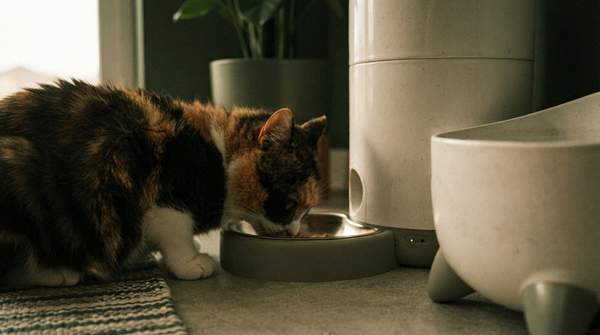
The best feeding station is the one you'll actually keep clean, that fits your home's look, and that suits your dog's body. That's the real answer. A gorgeous built-in nook in your cabinetry, a freestanding wooden stand, or a weekend DIY project can all work beautifully — but each one wins on different criteria. Here's how to choose.
Choosing Your Pet Feeding Station: Built-in, Freestanding, or DIY?
Modern home design is moving away from cluttered, freestanding accessories and toward permanent, built-in solutions, according to design writing from Zestora Life. A built-in station carved into your kitchen cabinetry feels bespoke and intentional, maximizes floor space, and keeps the daily routine organized in a way that bowls on a floor mat simply can't match.
Kitchen design guidance from CliqStudios makes the same case from a practical angle: traditional floor bowls get messy, sit in foot traffic, and food spills can attract ants and bacteria. A designated nook gives bowls, food, and water a home — and ties into your cabinetry so it looks planned rather than like an afterthought.
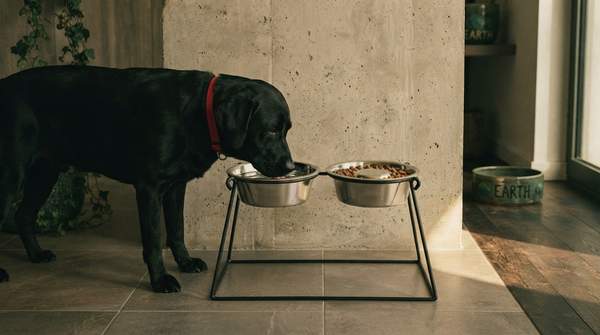
But built-in isn't the only path. Freestanding stations — like powder-coated metal stands that pair well with contemporary kitchens, or wooden feeders that match your wood tones — offer flexibility and character without renovation. And DIY options, from a simple silicone mat with raised edges to a custom stand, give you maximum control over cost and design. The trade-offs between them come down to aesthetics, hygiene, safety, and budget.
Decision Framework: Choosing Your Pet Feeding Station
Here's the comparison I'd run before buying or building anything. Each station type was evaluated against the same four criteria — how well it integrates into your home, how it serves your pet's health and safety, how easy it is to keep clean, and what it costs in money and effort. Read down your priority column and the right choice usually announces itself.
| Criterion | Built-in Station | Freestanding Station | DIY Solution |
|---|---|---|---|
| Aesthetic Integration | Seamless, furniture-grade look that ties into cabinetry; maximizes floor space and reduces clutter | Can match kitchen finishes — wood tones or powder-coated metal for contemporary spaces; flexible placement | Fully customizable to your décor, but the finished look depends entirely on your skill and material choices |
| Pet Health & Safety | Same as any station: bowl material and height matter most, not the housing | Available with non-slip bases and removable spill trays; proper bowl height is crucial, especially for specific conditions | You control materials and height — but you also carry full responsibility for safe, non-toxic choices |
| Maintenance & Hygiene | Contains messes and keeps supplies organized, but the design must allow easy access for cleaning | Removable spill trays catch water and kibble dust before they reach the floor; trays and bowls need regular cleaning | Hygiene depends on your build — treat cleaning as a design constraint from the start |
| Cost & Effort | Highest: custom cabinetry work and installation; a permanent investment | Generally moderate: commercial stands run roughly $20–$60 for a single adjustable stand, $60–$150 for a two-bowl wooden station | Lowest materials cost — a silicone mat is one of the most practical options for renters — but highest personal effort |
The pattern that emerges: built-ins win on seamless looks and organization, freestanding stands win on flexibility and mess management per dollar, and DIY wins on cost control and customization. Custom built-in stations start around $200 and climb from there, per Bearwood Essentials' design guide, while a DIY mat costs pocket change.
Essential Functional Details for Any Feeding Station
Whatever type you choose, a few rules apply universally. The first: treat cleaning as a design constraint, not an afterthought. That's the advice of Kimberly Taynor, who writes for Bearwood Essentials: "If your feeding station takes more than five minutes to clean, you will clean it less often." Build or buy for easy maintenance first, and let the aesthetics follow.
Second, contain the mess at the source. A silicone mat with raised edges at least half an inch high catches water splashes and scattered kibble before they reach your floor. Removable spill trays and non-slip bases do the same job on freestanding stands, preventing trapped liquids that breed bacteria.
Third, be cautious with smart feeders. Automated feeders can jam, glitch, or get abandoned entirely — commonly because of kibble bridging or app compatibility problems, according to Taynor's reporting. If you rely on one, test it with your specific kibble size before depending on it for daily feeding. The convenience is real; the reliability isn't guaranteed.
Fourth, placement matters. Design experts recommend a quiet, low-traffic area of the home, away from the chaos that makes dogs eat anxiously or skip water.
Pet Health and Safety: Material Choices and Elevated Feeders
Bowl material is a health decision, not just an aesthetic one. Stainless steel is the standard recommendation for hygiene — non-porous and easy to clean thoroughly. Glass is similarly inert and excellent for home use where weight isn't a concern, though it can shatter on impact. Ceramic is another non-porous option. Plastic, by contrast, is more porous and harder to keep hygienic. Silicone shines for travel and collapses flat, but hand washing works best.
Elevated feeders deserve special care. They genuinely help some dogs: veterinary nursing guidance notes elevated platforms eliminate neck strain from reaching down, and may minimize the risk of aspirating food and water — a real benefit for pets with laryngeal paralysis, other neuromuscular diseases, or brachycephalic anatomy.
Veterinarians also frequently recommend raised stations for senior dogs with severe arthritis, dogs with cervical spine disease or disc issues, and pets recovering from upper-body surgery, per safety guidance from Golden Paw.
But elevation isn't universally beneficial. Some veterinary professionals believed raised feeders might reduce bloat (gastric dilation and volvulus) in large and giant breeds by reducing swallowed air — yet recent research shows no evidence that elevated feeders reduce GDV risk. Dogs at risk for GDV should make an informed decision on bowl height with their veterinary team, who can take measurements in the clinic to guide the right height.
Watch for warning signs too: gagging, regurgitation, reluctance to eat, or visible discomfort during or after meals can indicate a feeding height problem or an underlying condition like megaesophagus that needs a specific feeding solution. Consult a vet if you see them.
Making the Right Choice for Your Home and Pet
Choose a pet feeding station that balances aesthetic integration with critical functional aspects like easy cleaning, appropriate bowl materials, and constant water access, considering your pet's specific health needs. If you're mid-renovation and want permanence, go built-in. If you want style and flexibility without the contractor, go freestanding. If budget and customization drive you, go DIY — with hygiene designed in from the first sketch.
Whatever you pick, the measurable indicator of success is a station that seamlessly blends into your home's design, remains consistently clean, and supports your pet's healthy eating posture and hydration. If your station cleans in under five minutes, your dog eats comfortably at the right height, and water is always accessible, you've gotten the design right.
Sources
- Pet Feeding Station Setup 9 Genius Ideas For Calm Homes — Zestora Life
- Where to Add a Pet Nook in Your Kitchen — Cliqstudios
- Unique Pet Feeding Station Ideas for Style and Health — BearwoodEssentials-Elevated Pet Feeders
- Counseling Clients on Food Bowl Selection: What’s the Dish? — Today's Veterinary Nurse
- Are Raised Dog Bowls Dangerous? Vet-Sourced Safety Guide — Golden Paw