The fastest way to waste less food isn't a complicated preservation project—it's learning a handful of repeatable techniques you can match to whatever scraps are sitting on your cutting board. Onion skins, carrot tops, broccoli stems, and that half-loaf of stale bread each have a natural destination: simmering, blending, regrowing, quick pickling, or frying. Once you know which method suits which scraps, deciding what to do with a bag of peels becomes as simple as choosing a recipe.
Your Zero-Waste Kitchen Starter Kit: Collecting and Storing Scraps
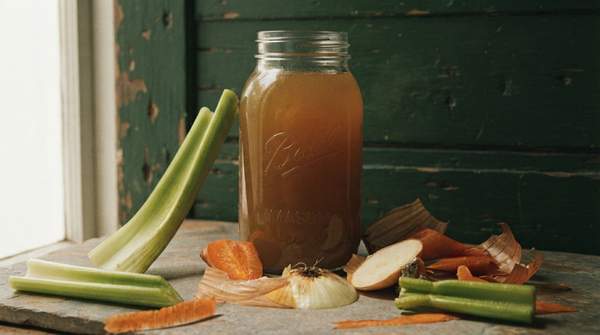
The habit that makes all of this work is collection. Registered dietitian Liz Weiss describes a home practice of keeping a resealable "veggie scraps" bag in the freezer: carrot peels and tops and herb stems go in as she cooks, and the bag is later pulled out for homemade broth, with chicken bones frozen separately for the same purpose. The freezer is your friend here—scraps accumulate gradually, and nothing spoils while you wait for a critical mass.
Think of your storage in categories. Aromatic vegetable scraps—onion skins, celery ends, herb stems—belong in the broth bag. Hardy stems and leafy greens like broccoli stalks and kale stems can be saved for chopping into salads, sautés, or dips. The National Onion Association suggests another prep-ahead move: chop onions and freeze them in olive oil, so even surplus slices are ready to flavor meals all week. And don't pour flavorful liquids down the drain; the Zero-Waste Chef's community of readers keeps pickle brine going by adding hard-boiled eggs, canned artichokes, onions, garlic, or even watermelon rinds to the jar.
Five Creative Techniques for Upcycling Kitchen Scraps
Here is the comparison at the heart of zero-waste cooking. Each technique takes a different kind of scrap and produces a different kind of food, so you can match your ingredients to the method that fits your time and appetite.
| Technique | Best For (Scraps) | Creates (Output) | Effort / Time |
|---|---|---|---|
| Simmering | Onion skins, carrot peels and tops, celery ends, herb stems, past-their-prime vegetables; chicken bones | Vegetable or chicken broth and stock for soups, stews, and sauces | A couple of hours of simmering, but minimal active work; collect scraps over time in the freezer |
| Blending | Broccoli stems, radish greens, kale stems, leftover cooked vegetables | Hummus, pesto, creamy soups, salads and dips | Quick—often minutes once scraps are ready; some vegetables benefit from roasting or steaming first |
| Regrowing | Green onion root ends (about an inch), and similar rooted ends | Fresh green shoots for ongoing harvest | Very little effort; shoots can appear within a day, but yields are small and need ongoing care |
| Quick Pickling | Leftover onion slices, carrot and celery scraps, cauliflower, turnips, radishes | Tangy condiments and snacks; jars can mix vegetables | Red onions can be ready in about thirty minutes; most pickles taste best left overnight in the fridge |
| Frying | Vegetable peels, thinly sliced scraps, wilting produce, leftovers | Veggie chips, fritters, latkes, Korean jeon, croquettes | Minimal effort for chips; firm, lower-moisture scraps work best |
Reading the table is a matter of matching what you have. A freezer bag of onion skins and carrot peels points to simmering: as Edible Communities notes, vegetable scraps, peels, and past-their-prime produce make great broth ingredients, and the flavor will depend on the variety and quantity you've saved. Avoid adding bitter greens or cruciferous stems in large quantities, since they can introduce off-flavors.
Blending suits softer, greener scraps. Dietitian Laura Yautz turns radish greens into a peppery hummus, while Kristina Todini tosses broccoli stems with cranberries, cilantro, and sesame dressing for a "food waste recovery salad," and Kelly Jones finely chops and sautés kale stems with shallots for omelets. Nuts, cheese, or oil may be needed to reach the consistency and flavor you want.
Regrowing is the gentlest technique. Bri Bell, a registered dietitian, leaves about an inch of green onion at the root end, places it in water on a sunny windowsill, and watches new shoots appear "in just 24 hours." The trade-off: yields are small and the plants need ongoing care. Quick pickling, by contrast, rewards patience measured in hours—Food Republic's Sophie Morelli reports that red onions pickle in around thirty minutes, carrots and cauliflower take a few hours, and most home cooks find every quick pickle tastes best after a night in the fridge. For frying, vegetable peels and thinly sliced scraps become chips with minimal effort, and Edible Communities suggests scraps and wilting produce also make fritters, latkes, and croquettes—though firm, lower-moisture scraps fry best.
Beyond the Bin: Reviving Stale Bread
Stale bread deserves its own plan, because it's one of the most commonly wasted foods and one of the easiest to rescue. The National Onion Association's advice is direct: "Bread going stale? Turn it into croutons or breadcrumbs." Both are pantry staples that take minutes and keep for weeks, converting a dry loaf into texture for salads and coatings for everything else.
The third use is older than any of these techniques. Edible Communities points out that many soups around the world—including the classic French onion soup—originated from the need to repurpose stale bread, which thickens and body a broth into a meal. Tear or cube the bread directly into the pot, or toast it first for more structure. Between croutons, breadcrumbs, and soup-thickening, a stale loaf rarely needs to reach the trash.
Embrace Zero-Waste: A Delicious Path to Sustainability
Integrate at least one zero-waste cooking technique into your weekly meal preparation to reduce food waste and explore new flavors. Start with the broth bag in the freezer, since simmering demands the least active effort, then add a second method as your scraps change. The measurable indicator of success is a noticeable decrease in the amount of food scraps discarded in your household trash or compost bin, and an increase in homemade broths, sauces, or snacks—concrete proof that what used to be waste has become dinner.
Sources
- Reduce Your Kitchen Carbon Footprint — Lizs Healthy Table
- Zero Waste Cooking: Simple Ways to Save Money, Reduce Food Waste, and Eat Better - National Onion Association
- 15 Creative Ways to Use All the Food Scraps - Zero-Waste Chef
- If It’s Edible, Eat It: Zero-Waste Cooking Recipes & Tips — Edible Communities
- 10 Ways To Use Veggie Scraps In The Kitchen - Food Republic