America's literacy crisis: Most 4th graders can't read proficiently.

Twenty-five million children in the U.

KT
Kenji Tanaka

June 29, 2026 · 6 min read

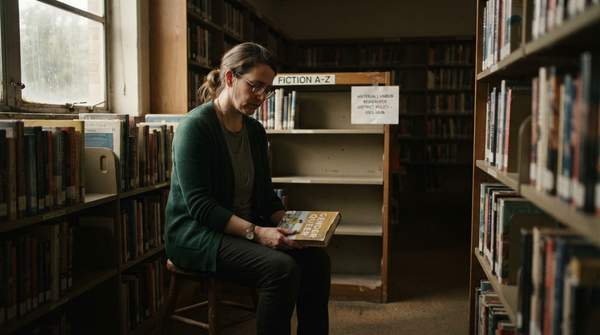
A young fourth-grade student looking distressed while trying to read a book in a dimly lit classroom, symbolizing the national literacy crisis.

Twenty-five million children in the U.S. cannot read proficiently, a staggering figure that underscores a silent crisis eroding the nation's future. This deficit extends far beyond academic struggle, threatening their ability to navigate an increasingly information-rich world and diminishing their future economic prospects. The persistent challenge of America's literacy crisis in 2026 demands urgent and comprehensive attention, especially in fostering reading at home.

While parents continue to read to their young children at consistent rates, the overall societal habit of reading for pleasure is in steep decline, creating a widening gap in literacy development. This disconnect suggests a foundational challenge where early efforts to cultivate reading skills are not consistently reinforced by a pervasive culture of sustained engagement with books, leaving children vulnerable as they grow.

Based on the persistent decline in reading for pleasure and these severe educational gaps, America risks creating a permanent underclass of citizens unable to fully participate in an increasingly complex world, unless a concerted effort to reignite a love for reading is undertaken. The consequences extend to national innovation, civic health, and individual opportunity, demanding a collective societal response.

The widespread failure in basic reading proficiency among American students is unequivocally demonstrated by current figures. According to Reading Is Fundamental (RIF), 25 million children in the U.S. cannot read proficiently, a number that reflects a systemic challenge in education. This deficiency becomes more pronounced as students advance through their academic careers, with 69% of 4th graders reading below grade level. 69% of 4th graders reading below grade level indicates that early gaps are not being closed effectively and are widening significantly as students progress from elementary to middle school.

These alarming statistics reveal a systemic failure to equip a significant portion of American youth with fundamental literacy skills, impacting their future educational trajectories and limiting their economic opportunities. Without proficient reading abilities, young people face diminished prospects for higher education, skilled employment, and active participation in a democratic society, thereby eroding the nation's collective intellectual capital and civic health. The implications for a competitive global economy and an informed citizenry are profound.

School Reforms Face Systemic Hurdles

Despite promising legislative and pedagogical efforts, internal systemic issues and external distractions continue to impede effective literacy instruction. Michigan lawmakers, for instance, are currently considering House Bill 5646, a measure designed to mandate science of reading training for all K-5 educators, according to The Detroit News. This legislative push is part of a broader, multi-year rollout of dyslexia and literacy laws passed in Michigan in 2024, directly affecting the state's youngest students and aiming to improve foundational reading skills across the state.

However, even with such well-intentioned reforms focused on evidence-based instruction, chaotic learning environments present significant barriers to implementation and student progress. A study of the Providence Public School District revealed that classrooms are interrupted more than 2,000 times a year, leading to a loss of 10 to 20 days of instructional time, as reported by The 74. This tension suggests that even the most well-intentioned and evidence-based educational reforms, like Michigan’s science of reading initiatives, may be severely hampered by pervasive classroom disruptions, preventing effective implementation and student progress. The 74's report of over 2,000 classroom interruptions annually in Providence schools indicates that even the most robust 'science of reading' initiatives are fundamentally undermined by chaotic learning environments, making sustained literacy gains nearly impossible.

Such disruptions not only reduce direct instructional time but also fragment learning, making it difficult for students to build consistent understanding and for teachers to apply new pedagogical strategies effectively. The focus on curriculum reform, while necessary, may prove insufficient without addressing the underlying issues that destabilize the learning environment itself, thereby creating a significant hurdle for literacy development.

The Eroding Culture of Reading for Pleasure

Declining engagement with reading for pleasure at home is a critical, often overlooked, contributor to the literacy crisis. The proportion of individuals reading for pleasure daily in the US decreased by 3% per year, as documented by research published in PMC. This consistent decline, observed over the past two decades, points to a societal shift away from sustained reading as a valued leisure activity, impacting the broader cultural environment for children and diminishing the presence of reading role models.

Adding to this challenge, 61% of U.S. children living at or below the poverty line have no books at home, according to RIF. 61% of U.S. children living at or below the poverty line have no books at home, coupled with the fact that 1 in 3 children entering kindergarten lack the basic skills they need to learn how to read, highlights a profound foundational literacy deficit for children before they even begin formal education. The absence of books in the home means limited opportunities for independent exploration and the development of a personal connection to reading, which is crucial for sustained literacy development beyond the classroom.

The RIF data revealing 61% of children in poverty have no books at home, coupled with 69% of 4th graders reading below grade level, suggests that legislative efforts like Michigan's new literacy laws will fail to close the proficiency gap without aggressive, direct intervention to provide access to reading materials in disadvantaged homes. Without a consistent supply of age-appropriate books, the early enthusiasm for reading cultivated in schools may quickly wane, creating a cycle of disengagement that is difficult to break.

Based on PMC's data showing consistent parental reading to young children but a 3% annual decline in adult reading for pleasure, America is creating a generation of children who receive early literacy exposure but lack adult role models to sustain a lifelong reading habit. PMC's data showing consistent parental reading to young children but a 3% annual decline in adult reading for pleasure indicates a societal failure to model reading as a valued, everyday activity beyond the early childhood years, thereby undermining the long-term development of robust reading skills and fostering a culture of passive entertainment over active engagement.

Beyond the Classroom: Rebuilding a Reading Society

The long-term societal consequences of widespread illiteracy necessitate a holistic approach that includes fostering reading beyond school walls. While the broader culture of reading for pleasure has eroded, one consistent effort remains: reading with children daily has not changed over time, though it is less common than reading for pleasure, according to PMC. The stability in early childhood reading, contrasted with the overall decline in adult reading for pleasure, highlights a critical gap: society is failing to transition children from passive listening to active, independent readers, capable of engaging with complex texts on their own and finding joy in the process.

This failure threatens future civic engagement and economic mobility, creating a populace less equipped to critically analyze information, participate meaningfully in public discourse, or adapt to evolving job markets that increasingly demand advanced literacy skills. The erosion of a reading culture, particularly in disadvantaged homes, creates a foundational literacy deficit for children before they even begin formal education, making the task of schools significantly harder and often insufficient on its own to overcome these deep-seated disadvantages.

Rebuilding a reading society requires a multi-pronged strategy that extends beyond school curricula. This includes widespread community initiatives to distribute books, foster family reading environments, and promote reading as a valued leisure activity for all ages. Without a concerted societal shift, the gains made in early literacy programs will continue to be eroded by a lack of sustained reinforcement at home and in the broader culture, perpetuating the cycle of low proficiency.

To reverse this trajectory, a renewed focus on accessible literature and community-based reading programs is essential. By 2026, initiatives targeting book deserts and promoting family reading time could begin to reshape the foundational literacy skills of young children, aiming to significantly reduce the 25 million children currently unable to read proficiently. Organizations like RIF, in partnership with local libraries and community centers, will be crucial in providing direct access to books for disadvantaged homes, offering a tangible step towards mitigating the literacy crisis and fostering a new generation of lifelong readers.