You don't need a big budget or a spare room. You need three things: a plan for what to buy, cheap ways to get it, and shelves that invite every hand in the house. Here's the framework I'd follow, built on expert-recommended book lists, community sourcing tricks, and organization advice from librarians themselves.
Curating Your Collection: Expert-Recommended Books for Every Age
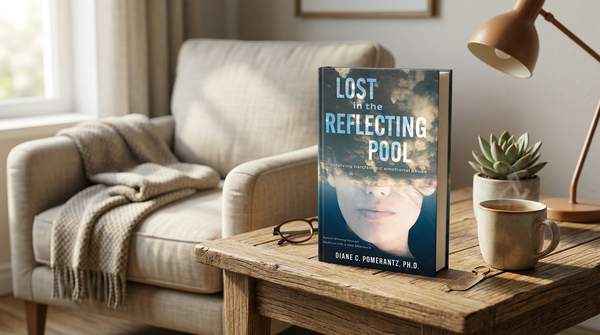
Start with the experts. The Children's Book Council and the Ingram Content Group publish a "Building a Home Library" list of recommended new and classic books, organized by age groups from 0 to 14. It's compiled by experts in children's literature and spans a vibrant range of genres and formats, from board books to graphic novels and picture books to middle-grade fiction, with a deliberate focus on diversity of voices and publishers large and small.
The American Library Association points families to that same list, which was created by the ALA–Children's Book Council Joint Committee with help from ALA's Association for Library Service to Children. Its purpose is exactly yours: guiding parents, grandparents, and others assembling a high-quality library for children at home. Beyond it, the ALA maintains its own collections of recommended reading drawn from its award-winning books and book lists, covering children and young adults.
For adults, the same principle applies. Rather than chasing bestseller hype, lean on curated lists and award winners from librarians and booksellers. The point isn't a definitive must-read canon—it's a trustworthy starting shelf you can grow from.
Sourcing Books Affordably: Grow Your Library Without Breaking the Bank
Now the fun part: hunting. Thrift stores and secondhand shops are the classic first stop. As children grow up, families often sell or donate their children's books, so these shops are full of forgotten gems waiting to be rediscovered.
Public libraries are another goldmine. Most have volunteer organizations that run used book sales, and some branches keep small used bookstores inside the library. Children's books at these sales are often priced at just $1 to $3, according to budgeting guidance from PBS SoCal's education team. School libraries discard books too—United Through Reading suggests emailing or calling your school librarian politely to ask about their discard process and whether community members can claim books before disposal. That route can net classic literature, reference books, and educational materials at no cost.
Don't overlook Little Free Libraries, the small community book-exchange boxes that run on a "take a book, leave a book" principle. With over 150,000 registered worldwide, they're an excellent free source. And keep an eye on neighborhood yard and estate sales, where whole collections often go for pocket change.
Organizing for All Ages: Making Your Library Accessible and Inviting
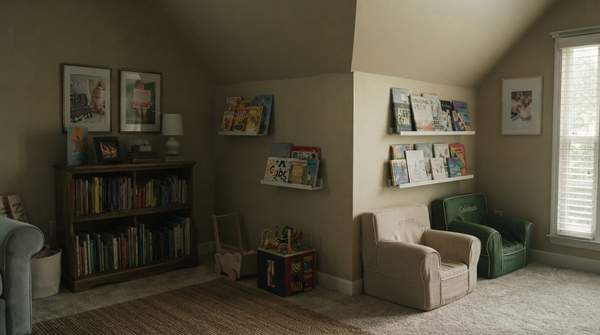
Here's where many home libraries fail: the books are there, but nobody can reach them. For children's books, skip the strict shelving systems. A librarian writing for Library Journal notes that while public libraries shelve picture books alphabetically by author or by theme, for most parents a strict home system isn't worth the trouble. Instead, store often-read titles on low shelves or in bins easily accessible to both child and grown-up. Save precious inscribed gift books and heirlooms for high, face-out display shelves out of reach of little hands.
For the rest of the house, organize by room and by use. The Bethlehem Public Library suggests keeping frequently used cookbooks in the kitchen, sorting piles by room, and putting special collections—fairy tales, local history, art, humor—on display in the family room or on the coffee table. Strategic placement weaves books into daily life instead of quarantining them.
Finally, involve the kids in weeding. Ask them to sort their collections into "keep" or "let go of" piles. Children's books go out of print quickly, so a title in good condition can be sold or donated—feeding your next sourcing run.
Your Family Library Building Checklist
Here's the whole plan in one place. Each row maps a stage of library-building to the age group it serves, the resource or strategy to use, and what it gets you.
| Library-Building Aspect | Age Group | Strategy or Resource | What It Delivers |
|---|---|---|---|
| Children's book selection | 0–14 | "Building a Home Library" list from the Children's Book Council and Ingram Content Group, organized by age bands 0–3, 4–7, 8–11, 12–14 | Expert-compiled picks spanning diverse genres, formats, and voices |
| Broad selection guidance | Children through young adults | ALA recommended reading lists and award winners | High-quality selections beyond a single list |
| Affordable sourcing | All ages | Thrift stores, library book sales ($1–3 children's books), school library discards, yard and estate sales | Books at a fraction of new retail prices, sometimes free |
| Free community sourcing | All ages | Little Free Libraries ("take a book, leave a book") | Ongoing free exchanges with neighbors |
| Children's organization | Young readers | Low shelves or bins for everyday titles; high face-out display for keepsakes | Easy child-led browsing and protected treasures |
| Whole-home organization | Adults and kids | Shelve by room and subject; display special collections in shared spaces | Books integrated into daily family life |
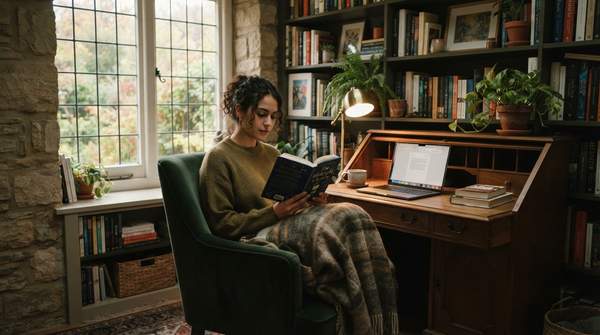
| Shared reading | Everyone | A designated reading nook or shared reading spot | A comfortable place where the family reads together |
Work down the rows in order: pick your lists, hunt your sources, then arrange for reach and display. The matrix is deliberately age-tailored—what works for a toddler's board books won't work for a teen's novels, and the plan accounts for that at every step.
Start Building Your Family's Literary Legacy
Begin curating your home library by selecting expert-recommended books, using affordable sourcing methods, and organizing your collection to be accessible and inviting for every family member. You don't have to do it all at once. One list, one library book sale, one low shelf—that's a library in progress.
Watch for the measurable sign it's working: an increase in engagement with books across all age groups in your home, especially in your shared reading spaces. When the toddler pulls a bin off the low shelf unprompted, or someone lingers by the coffee-table display, your library has stopped being furniture and started being a family habit.
Sources
- LibGuides: Setting up a Library: Small and Home Library
- 14 Low-Cost Ways to Build a Home Library for Your Kids on a Budget — PBS SoCal
- How to Build a Home Library on a Budget — Unitedthroughreading
- 6 Inexpensive Ways to Build Your Home Library — All About Learning Press
- Libraryjournal
- How to organize your personal library – Bethlehem Public Library — Bethlehempubliclibrary