Here's the short answer: a truly cozy reading nook comes down to five elements—comfortable seating, layered lighting, smart storage, soft textiles, and personal touches. Get those right, and everything else falls into place. I've pulled the specifics from design experts and lighting specialists so you can plan yours with confidence, down to the exact lumens and Kelvin ratings that make evening reading easy on your eyes.
Crafting Your Cozy Reading Nook: The Five Essential Elements
Before you buy a single thing, think about what a nook actually is: an oasis. Designer Proxmire, quoted in a piece by Sarah Lyon for Architectural Digest, says a reading nook "needs a neat and quiet space that is tucked away from regular family/household activities." So location comes first. Then layer in the five elements in order: seat, light, storage, textiles, and the personal details that make it yours.
Each element does a different job. Seating protects your posture through hours of reading. Lighting protects your eyes and sets the mood. Storage keeps the books you love within reach. Textiles add physical warmth. Personal touches make the space feel like yours rather than a showroom's. Skip one, and the nook feels incomplete—great chair, harsh light; lovely lamp, nowhere to put your tea.
Element 1: The Perfect Perch – Choosing Your Seating
Seating is the heart of the nook. Liana George, writing for Scrivenings Press, recommends a chair with good back support and arms at just the right height for resting a book or e-reader—accent chairs, wingback chairs, or a plush armchair all work beautifully. Her test is simple: the chair should support your posture for extended reading sessions "while feeling like a warm hug."
Frizzell Furniture Gallery offers a wider menu: a chair-and-ottoman pairing, a power recliner with lumbar support, or a chaise if you like to stretch out. The trade-off is real. An ottoman or chaise demands floor space, which tight corners can't spare. BenQ's guide pegs ottomans at roughly 16 by 16 inches—and notes that even that modest footprint "might not be suitable for compact nooks." Measure your corner first, then fall in love with a chair.
Element 2: Illuminating Your Literary World – Optimal Lighting
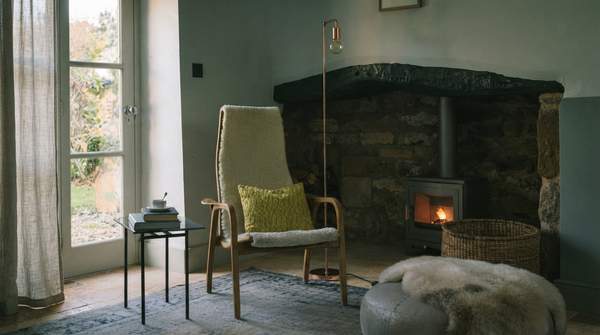
This is where most nooks fail—and where specifics matter. Lighting specialists at VAXLAMP recommend 300–400 lumens for casual evening reading, with a warm color temperature of 2700–3000K. BenQ's lighting guide agrees: warm white in that range reduces eye strain and supports better sleep, while cooler 5000–6500K light boosts alertness—great for a home office, less cozy for bedtime chapters.
If your nook doubles as a study spot, VAXLAMP's reference table suggests a dimmable lamp covering 300–800 lumens with adjustable color temperature to cover both moods. For color quality, a CRI of 80 or higher renders book illustrations and fabric shades faithfully; Glocusent's Mason W. rates 80–90 as good and 90+ as excellent. Position the lamp to avoid glare and shadows on the page—designers quoted by Architectural Digest favor sconces, floor lamps, and table lamps for exactly this reason.
Element 3: Smart Storage Solutions for Your Books and Essentials
Books within arm's reach get read more often—that's the practical logic behind storage. BenQ suggests shelves at least 10–12 inches deep and 72 inches high, plus a side table around 20 inches tall and 15 inches in diameter for your drink, lamp, or current read. The side table can double as a display surface for decorative items.
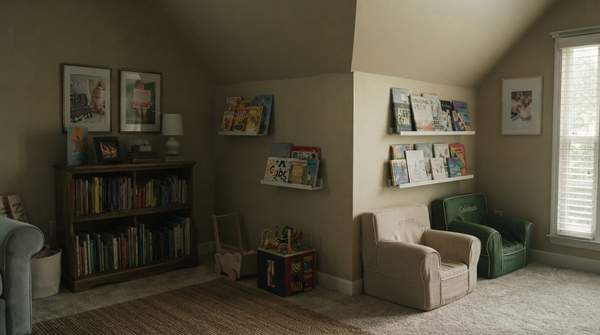
Frizzell Furniture Gallery recommends floating shelves or a compact bookcase to maximize vertical space in a snug corner, with decorative baskets for magazines and blankets. Their styling tip: arrange your collection by genre, author, or even color to make the shelf itself part of the nook's charm. Whatever you choose, storage should match the nook's look—clashing bins undo the calm you're building.
Element 4: Embracing Comfort with Textiles
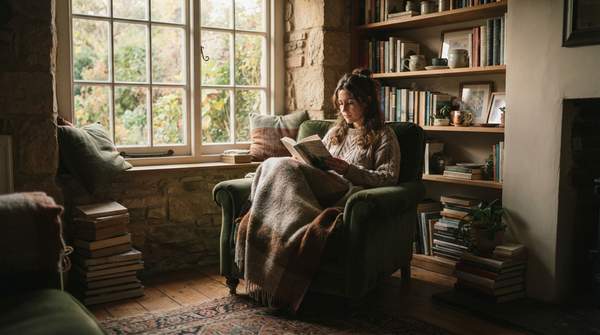
Textiles are what turn furniture into a hug. Proxmire suggests several accent pillows to prop up and support your back, alongside a cushion seat. Frizzell Furniture Gallery echoes this: soft throws and decorative pillows add both physical comfort and visual warmth. Choose materials and colors that match the mood you're after—chunky knits for a rustic corner, linen for something airy.
There's a practical payoff, too. A throw blanket within reach means you'll stay put longer instead of retreating when you get chilly. The same baskets that organize your magazines can hold the blanket, keeping warmth and tidiness in one place.
Element 5: Personal Touches to Make It Uniquely Yours
This is the fun part. Frizzell Furniture Gallery suggests decor that reflects your interests: vintage bookends, a throw in your favorite color, or literature-inspired wall art. The goal is a space that feels distinctly yours, not catalog-generic.
Stylist Emily Henderson offers a sequencing trick: place your lamp first, then stack books horizontally and vertically to create movement on the shelves, add art, and fill gaps with sculptural objects like vases, plants, and trinket dishes. The order matters—big pieces anchor the arrangement, small ones fill the gaps. Start with the functional pieces and layer personality on top.
Your Personalized Reading Nook Planning Checklist
Use this table as your working plan. For each element, note your actual selection before you buy anything—that's what turns general advice into your plan.
| Element | Key Consideration | Recommended Choice | Watch Out For |
|---|---|---|---|
| Seating | Back support and arm height | Armchair, wingback, or chair with ottoman | Ottomans and chaises need extra floor space |
| Lighting | Brightness and color temperature | 300–400 lumens, 2700–3000K warm white, CRI 80+ | Cool 5000–6500K light is for focus, not cozy evenings |
| Storage | Accessibility and vertical space | Shelves 10–12" deep, 72" high; side table ~20" tall; baskets | Storage that fights the nook's aesthetic |
| Textiles | Back support and warmth | Cushion seat plus several accent pillows and a throw | Colors that clash with your intended mood |
| Personal touches | Identity and display | Bookends, art, plants, sculptural objects | Overcrowding—place the lamp first, then layer |
Work through each row and write down your specific pick—the lamp model, the chair, the shelf placement. If a row stumps you, revisit that section above; every recommendation traces back to a specific consideration, from arm height to Kelvin range.
Creating Your Ultimate Cozy Reading Nook: A Final Decision
By thoughtfully addressing each of the five essential elements—seating, lighting, storage, textiles, and personal touches—you can successfully create a functional, comfortable, and uniquely personalized reading nook. The measurable indicator of success: the completed reading nook provides a dedicated, inviting space that encourages regular reading and relaxation, with all chosen elements contributing to comfort and aesthetic appeal. If you find yourself choosing the nook chair over the sofa, you got it right.
Sources
- 45 Cozy Reading Nook Ideas That Are Bestseller-Worthy — Architectural Digest
- How to Create a Cozy Reading Nook: 11 Must-Have Essentials for Book Lovers - Scrivenings Press LLC
- The Ultimate Guide to Creating the Perfect Reading Nook — Frizzell Furniture Gallery - Local Furniture & Mattress Store
- Transform Your Space: Creative Reading Nook Ideas for Every Home — BenQ
- Warm vs Cool Light for Reading — VAXLAMP
- What are the Best LED Colors for Reading and Studying? Unlock the… — BenQ
- Which is the Best Color Light for Reading — Glocusent
- How To Style A Reading Nook - Emily Henderson