Understanding consciousness involves exploring how people perceive the world, direct their attention, and develop their sense of identity. These questions sit at the intersection of philosophy, contemplative traditions, neuroscience, and self-inquiry. Through The Kingdom Within, author One Iam explores these ideas in books that examine the relationship between awareness and everyday experience.
Drawing on Hermetic philosophy, contemplative traditions, and the mechanics of perception, One Iam invites readers to question familiar assumptions about the mind and the nature of reality. Three books stand out for their focus on attention, perception, and awareness, offering intellectual seekers different starting points for exploring these subjects.
1. Attention Loops Explores How Focus Shapes Experience
Attention plays an important role in how people interpret their experiences. What someone repeatedly focuses on can influence their thoughts, expectations, and responses to the world around them. Over time, these patterns may become familiar ways of thinking that affect how new situations are understood.
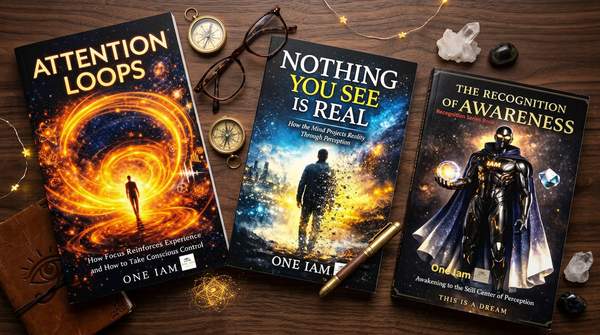
In Attention Loops: How Focus Reinforces Experience and How to Take Conscious Control, One Iam examines the relationship between attention and recurring patterns of experience. The book explores how repeated focus can reinforce certain interpretations, making them increasingly familiar and influential.
This subject connects with questions about habits, identity, and the ways people respond to their surroundings. For example, someone who consistently expects negative outcomes may become more attentive to experiences that appear to confirm those expectations. Recognizing this tendency creates an opportunity to examine how attention influences interpretation.
One Iam encourages readers to consider where their attention rests and how repeated mental patterns shape their experience. Rather than treating every thought or reaction as an unquestionable reflection of reality, readers are invited to observe these patterns and reflect on their role in everyday life.
For those interested in mindfulness, self-awareness, and personal reflection, Attention Loops provides a starting point for examining the relationship between focus and perception.
2. Nothing You See Is Real Examines the Nature of Perception
People generally experience sight, sound, and touch as direct encounters with the world. However, perception involves processes through which sensory information is interpreted and organized. What someone experiences is connected to both external stimuli and the ways the mind processes incoming information.
One Iam explores this relationship in Nothing You See Is Real: How Frequency Information Is Mentally Interpreted Into Sight, Sound, and Touch. The book examines how sensory information becomes part of conscious experience and encourages readers to consider the relationship between perception and reality.
Colors, sounds, textures, and other sensory qualities are experienced through perceptual processes rather than as unfiltered access to the world. This raises broader philosophical questions about the relationship between what people perceive and what exists beyond their perception.
The topic also connects with predictive approaches to neuroscience, which examine how expectations and prior experiences can influence perception. These ideas offer one way to explore why two people may interpret the same situation differently or why familiar assumptions can affect what someone notices.
The book's title presents a provocative premise that encourages deeper inquiry. Its subject matter may appeal to readers interested in consciousness, the philosophy of reality, and the relationship between sensory experience and interpretation.
Through this exploration, One Iam invites readers to examine perception more carefully and consider how the mind contributes to the world as it is experienced.
3. The Recognition of Awareness Investigates Consciousness
Thoughts, emotions, memories, and sensations constantly change. Yet people can also notice these experiences as they arise. This distinction raises an important question for contemplative philosophy: What is the awareness through which these changing experiences are noticed?
In The Recognition of Awareness: Awakening to the Still Center of Perception, the first book in the Recognition Series, One Iam explores this question through the idea of awareness itself.
Rather than concentrating only on the contents of the mind, the book directs attention toward the act of noticing. Readers are encouraged to consider the difference between an experience and the awareness of that experience. A passing thought, for instance, can be observed without automatically defining a person's entire identity.
This approach connects with contemplative traditions that use observation and self-inquiry to examine the nature of consciousness. It also invites reflection on the relationship between the observing self and the experiences that seem to make up personal identity.
For readers who enjoy philosophical questions about the self, non-dual perspectives, and contemplative practice, the book offers a framework for exploring awareness from a more introspective angle. One Iam emphasizes recognition and inquiry, encouraging readers to investigate their own experiences rather than simply accept an idea as a belief.
How One Iam Connects Philosophy, Neuroscience, and Self-Inquiry
The three books approach consciousness from different but related directions. Attention Loops examines recurring patterns of focus, Nothing You See Is Real investigates the relationship between perception and interpretation, and The Recognition of Awareness turns toward the awareness through which experiences are noticed.
Together, these themes reflect the broader direction of One Iam's work through The Kingdom Within, where attention, identity, and perception serve as starting points for examining lived experience.
One Iam brings several perspectives into conversation, including Hermetic philosophy, contemplative traditions, predictive neuroscience, and direct self-inquiry. These perspectives do not necessarily share the same methods or conclusions.
Exploring them together can nevertheless give readers different ways to approach enduring questions about consciousness and the mind.
The distinction between philosophical inquiry and scientific evidence remains important. Neuroscience can investigate mechanisms involved in perception and attention, while contemplative and philosophical approaches may explore questions about awareness, identity, and meaning.
This combination makes One Iam's books relevant to people who want to examine familiar experiences from new angles and develop a more reflective approach to understanding themselves.
Who Should Explore One Iam's Books on Consciousness?
The books available through The Kingdom Within may interest readers who enjoy exploring questions that extend beyond conventional self-help topics. Their themes can appeal to people with different backgrounds and reasons for studying consciousness.
These books may be worth exploring for:
- Philosophy and spirituality enthusiasts interested in awareness, identity, contemplative traditions, and the nature of reality.
- Readers curious about neuroscience who want to reflect on attention, sensory processing, and the mind's role in perception.
- People interested in self-inquiry who want to examine recurring thoughts, familiar assumptions, and their relationship with everyday experiences.
- Intellectual seekers who appreciate open-ended questions and enjoy comparing different perspectives on consciousness.
Explore Consciousness Through The Kingdom Within
Questions about consciousness, perception, and identity continue to inspire philosophical debate and scientific investigation. Through The Kingdom Within, One Iam explores these subjects in books that encourage readers to examine how they direct their attention, interpret sensory information, and understand awareness.
From the recurring patterns explored in Attention Loops to the questions about perception raised by Nothing You See Is Real and the contemplative focus of The Recognition of Awareness, each title offers a different entry point into these ideas.
Explore The Kingdom Within's collection of books by One Iam to discover new perspectives on consciousness, perception, and the mind.