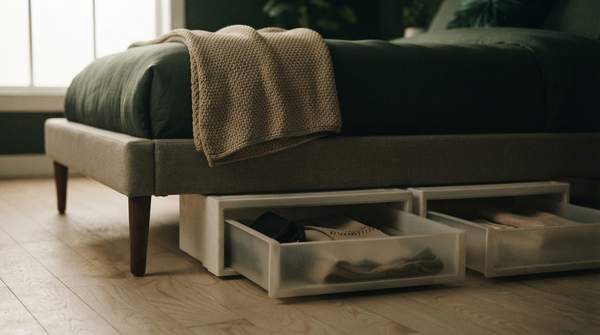
Under-bed storage is the single easiest way to add capacity to a small bedroom, but the right choice depends on three things: what you are storing, how often you need to reach it, and how much clearance your bed frame actually allows. The five most common solutions—wheeled drawers, lidded plastic bins, fabric bags, vacuum-seal bags, and low-profile containers—each trade convenience, protection, and looks differently. Here is how to pick yours with confidence, starting with a measurement most people skip.
Unlock Hidden Space: Why Under-Bed Storage Matters for Small Bedrooms
That gap beneath your mattress is functional square footage you already own. IKEA's under-bed storage range is built around exactly this idea: containers that keep extra bedding, pillows, and clothes "out-of-sight but within easy reach," in styles and sizes made for beds of varying heights. The retailer frames the payoff in everyday terms—imagine if every item in your closet, armoire, and dresser were for the current season only. Getting ready becomes quicker because you are not digging past off-season clothes that cause wrinkles and fallen hangers.
Decluttering retailers like The Container Store make the same pitch with low-profile boxes and wheeled bins for clothes, shoes, and seasonal items. The category works because it borrows storage from space that would otherwise sit empty, without consuming any floor area you need for walking, a desk, or a bookshelf. In a room where every square foot is contested, that is a rare win.
There is also a design dimension. Writing for Architectural Digest, Lauren Arzbaecher describes her own small bedroom, where the bed sits in a corner to fit a desk and bookshelf, limiting storage access to one side. Her point applies to any layout: under-bed storage adapts to awkward rooms in ways a second dresser cannot, but only if you choose containers you can actually reach from the sides you can access.
Understanding Your Bed's Clearance: A Critical First Step
Before buying anything, measure from the floor to the underside of your bed frame—not the mattress top. Bed height guides from furniture sellers give useful reference points. Cabinfield's guide categorizes low beds at 16–20 inches total height (floor to mattress top) and warns they offer "limited under-bed storage," while high beds at 26–30+ inches are specifically noted as good for under-bed storage. Cozy Home Furniture similarly flags its 16-to-20-inch low-platform range for "insufficient under-bed clearance if you rely on storage bins."
Those guides describe total bed height, so your usable clearance will be less once you account for the frame's rails and any support structure. That is why the measurement matters more than the category: two "standard" beds can leave very different gaps. Measure at the narrowest point, too, since center rails and legs often reduce the space where a container actually has to slide.
The practical takeaway: if your frame is low, plan for containers in the 4-to-7-inch range—retail listings show under-bed bins as shallow as 4.5 and 6 inches made for exactly this situation. A standard 22–25 inch bed frame typically leaves room for most bins, and Cozy Home Furniture calls its 22-to-26-inch range the most versatile for pairing with typical furniture. If you cannot fit even a low-profile box, your container options narrow sharply, and the height of your bed frame—not the storage aisle—becomes the deciding constraint.