Yes, you can make a small, dim home feel dramatically brighter without touching its architecture. The levers that matter most are the ones you can change yourself: paint and finish, mirrors, transparent furniture and dividers, and window treatments. Design guidance from interior design educators and home designers converges on a few core principles, and once you understand how light reflects and diffuses, you can prioritize the moves that fit your layout, budget, and privacy needs.
Understanding Light: Principles for Small Spaces
Every strategy in this guide comes down to two behaviors: reflection and diffusion. Light-colored surfaces reflect natural light, which makes rooms feel brighter and more spacious, as the design team at Rotelle Studio(e) explains. Reflective materials distribute light more effectively throughout a space, so a single window's reach depends heavily on what the light hits once it enters.
Diffusion is the softer partner to reflection. Sheer fabrics, for example, soften and spread incoming light rather than letting it land in one harsh stripe. In a small home, where every window is precious, the goal is to keep light moving—bouncing it deeper into the room and spreading it evenly—instead of letting dark walls, heavy drapes, and solid furniture absorb it.
Strategic Surfaces: Maximizing Reflection with Paint and Finishes
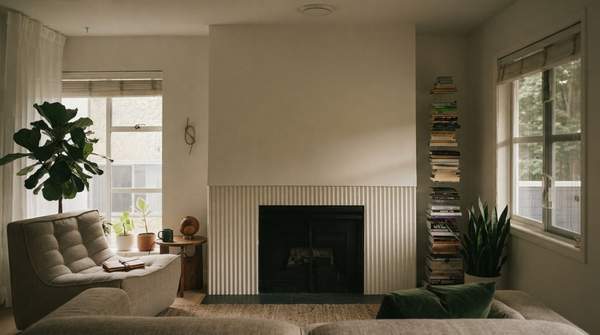
Your walls, ceiling, and floors are the largest surfaces in the room, so they are your biggest opportunity. Light-colored walls, ceilings, and floors reflect natural light and make spaces feel brighter and more spacious, according to Rotelle Studio(e)'s design guidance. The ceiling counts as much as the walls: in a small room, a dark ceiling visually closes the space in and swallows light that would otherwise bounce back down.
Finish matters alongside color. The Interior Design Institute recommends glossy finishes specifically because they help bounce natural light around the room, making spaces feel more open and airy. A higher-sheen paint, a lacquered side table, or a polished floor all work the same way: each glossy surface acts as a mild mirror, redirecting daylight into corners it would otherwise never reach. Matte finishes still help if the color is light, but they reflect less.
The Architect's Trick: Mastering Mirror Placement
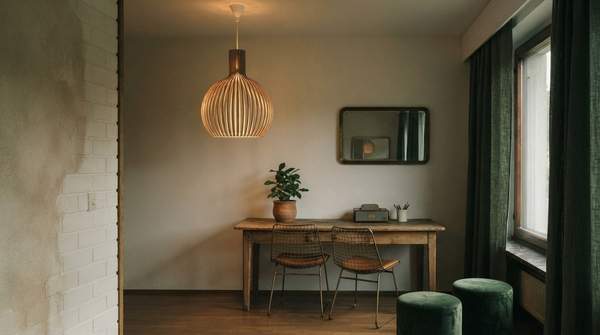
If you adopt only one technique from this guide, make it this one. Placing a large mirror on a wall perpendicular to a window is an old architect's trick to "double" the amount of light entering the room, according to the design team at Archival Designs. The geometry is what makes it work: a mirror opposite a window mostly reflects the window back at itself, while a mirror on a side wall catches the incoming light at an angle and redirects it across the room.
Practically, this means measuring which walls sit at a right angle to your main window and hanging the largest mirror you can reasonably fit there. Size matters—a large mirror captures more of the light stream than a small one. The same principle applies to other reflective decor: any mirrored or high-gloss object positioned to intercept daylight extends that light's path further into the room.