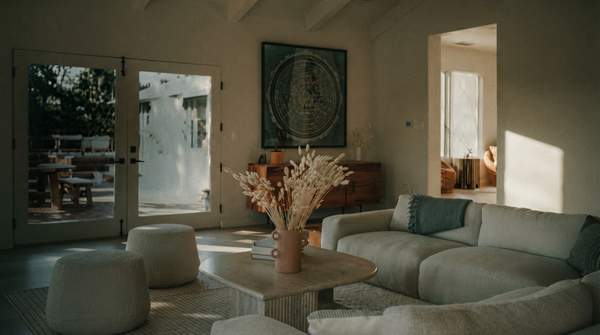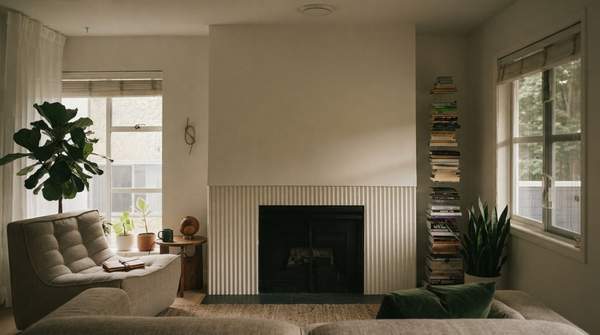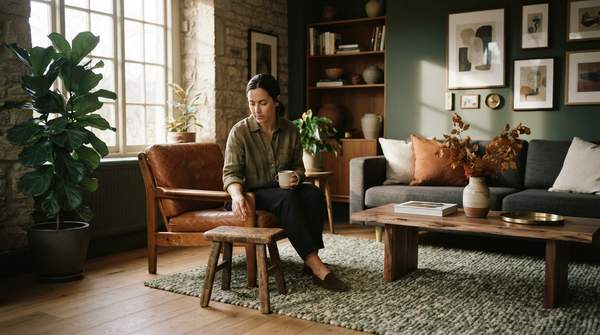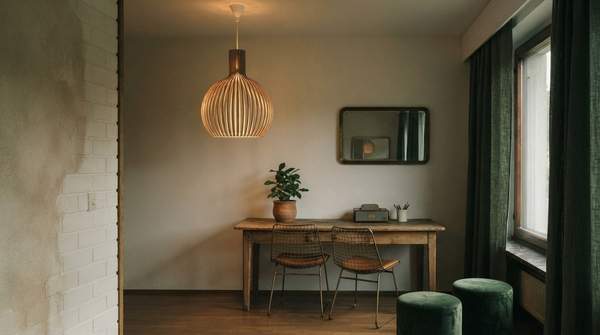
Scandinavian design has a reputation for brightness, but the real skill is management, not maximization. Born of long, dark winters, this style is about deciding where light goes, how it gets filtered, and what happens when it fades. You do that with three tools: window treatments that let daylight in without surrendering privacy, mirrors that redirect light into dim corners, and warm, layered artificial light that carries the calm into the evening. Here's how the pieces work — and a decision framework at the end for matching the strategy to your own room. One boundary up front: this covers decor and lighting choices, not structural work like adding windows or skylights.
The Scandinavian Approach to Natural Light: Maximizing and Moderating
Why the obsession with light? Geography. As Rachel Brown writes for Homedit, because of the long, dark winter season, Scandinavian homes are built to reflect as much light as possible. So the first move is refreshingly simple: keep your windows as open as you can.
Then amplify whatever arrives. A base of crisp white or soft off-white enhances natural light and creates an airy feel, while light grays add depth without weighing the room down. A neutral palette like this is a hallmark of the style, creating a serene and timeless ambiance.
But maximizing is only half the story. Moderation matters too. Architectural Digest's style guide advises curating the belongings you leave out in the open to keep the calm mood intact. As Brantmark put it to House Beautiful: "keep the space around [the items] decluttered so you can more easily appreciate the beauty of each item." Fewer objects means fewer interruptions — for the light, and for your attention.
Window Treatments: Controlling the Inflow of Light
Sheer window treatments are the workhorse here. With them, you enjoy natural light during daytime hours without compromising privacy, as a guide from ArchitectGPT puts it — a sense of openness while still shielding your interiors. That balance creates what the guide calls a "cozy yet cheerful" ambiance throughout the day.
When you need more coverage, texture and color do the heavy lifting. Homedit recommends curtains or shades that are light and natural in texture and color, so the room keeps its airy aesthetic even when the windows are dressed.
The practical logic: sheer layers for daytime filtering, light natural-textured options when privacy demands more. What you're avoiding is anything heavy or dark that chokes off the inflow this whole design tradition depends on. And notice the mood payoff — the goal isn't raw brightness. Filtered daylight makes a room feel gentle rather than stark, which is exactly the serenity you're after.
Reflective Surfaces: Amplifying and Directing Light
Mirrors are your daylight multipliers. Placed strategically, they act as reflective surfaces that bounce sunlight around the room, illuminating darker corners and spreading brightness evenly, according to ArchitectGPT's guidance.
Here's the reasoning you can act on: daylight enters through windows and travels in straight lines. A mirror positioned where that light lands catches it and redirects it into areas the windows can't reach. So walk your room at its brightest hour, find where the light pools, and place a mirror where it can catch that light and carry it into the dimmest corner.
Done well, this keeps a space feeling bright and cheerful even during the darkest months of the year — and ArchitectGPT notes the approach can boost mood and energy levels, not just aesthetics. One caution from the same logic: a mirror facing an unlit wall just reflects the wall. Aim it at light, not at itself.
Layering Artificial Light: Creating Atmosphere After Dark
When the sun gives up, layered light takes over. Homedit's guidance is to add multiple layers of warm artificial light — not one bright ceiling fixture, but several softer sources you can adjust as the day turns to evening.
Think in three layers. Ambient light is your base: overall illumination that keeps the room balanced and serene. Task light serves specific activities — reading, cooking, working. Accent light is pure atmosphere: warmth and coziness.
The sources matter as much as the structure. A Lifehack guide to the style suggests floor lamps that provide soft, indirect lighting while doubling as decorative elements, plus candles for a warm, intimate glow. Andrew Nixon, writing for lighting company Pooky, points to pendants over a kitchen island or dining table, floor lamps with natural linen shades and whitewash finishes, and even houseplants on the sill to finish the look.
The clearest proof of concept: Homedit highlights a Scandinavian interior with windows left unadorned and both task and ambient sources layered, so the owners could adjust the light throughout the day and evening as needed. That adjustability is the whole point.
Scandinavian Light Management Decision Framework
Here's where it comes together. Instead of memorizing tips, run your room through two questions: how much daylight does it actually get, and what mood do you want it to hold? The matrix below maps each answer to the combination of window treatments, reflective surfaces, and lighting layers the evidence supports.
| Natural Light | Desired Mood | Window Treatments | Reflective Surfaces | Artificial Light Layers |
|---|---|---|---|---|
| Low daylight | Bright and airy | Windows kept as open as possible; light, natural-textured curtains or shades only where privacy demands | Mirrors placed where daylight lands, bouncing it into darker corners | Warm ambient base plus task sources, adjustable across day and evening |
| Low daylight | Cozy and cheerful | Sheer curtains or blinds that filter daylight while shielding the room | Mirrors positioned to spread brightness evenly | Soft indirect floor lamps plus candles for a warm, intimate glow |
| Any level, with privacy needs | Cozy yet cheerful | Sheer treatments — openness without exposure | Mirrors keep darker corners lit even with windows dressed | Ambient layer for overall balance; add task light for specific activities |
Whatever daytime row you land in, evening is universal: multiple warm layers — ambient for balance, task for function, candles and soft lamps for glow — so you can dial the atmosphere as natural light fades. Pair any row with a white or off-white base and a decluttered surface, and each element reinforces the others.
Achieving Serenity Through Intentional Light Design
The decision is this: implement a layered lighting strategy and thoughtful natural light management to create a serene and functional Scandinavian-inspired interior. Not more light — better-directed light, filtered where it needs softening, redirected where rooms run dim, and replaced by warm layers after dark.
Your next step is concrete. Walk your room at its brightest hour, note where the light pools and which corners stay dim, then choose your row in the framework and adjust from there. You'll know it's working when the interior ambiance is serene and functional, with layered natural and artificial light creating a bright, airy, cozy, and inviting atmosphere.
Sources
- Scandinavian Interior Design Essentials: Neutral Colors, Natural Light, and Lasting Comfort — Homedit
- Scandinavian Interior Design: Everything You Need to Know About This Winter-Friendly and Nature-Inspired Style — Architectural Digest
- Scandinavian Design Looks Beautiful—But It Serves an Important Purpose — House Beautiful
- 10 Essential Elements of Scandinavian Interior Design: How to Achieve the Perfect Nordic Look — ArchitectGPT
- Essential Elements of Scandinavian Interior Design — Lifehack