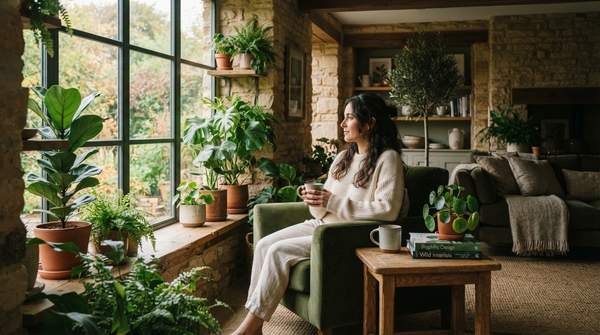
Biophilic design is an approach to creating indoor spaces that connect people more closely to nature. By thoughtfully incorporating natural materials, light, plants, and other organic elements, you can create a home environment that enhances well-being, reduces stress, and fosters a sense of harmony. The core idea is that humans have an innate tendency to seek connections with nature, and satisfying this need indoors can lead to significant psychological and health benefits.
While the concept can sound complex, applying its principles does not require major renovations. A growing body of research shows that even simple changes—like adding houseplants, maximizing daylight, or choosing furniture made from natural wood—can have a documented positive impact on mood and reduce anxiety. This guide provides a practical framework to help you assess your own space and make intentional choices that transform your home into a more restorative, nature-connected sanctuary.
What is Biophilic Design? Connecting Your Home to Nature
At its heart, biophilic design is the practice of integrating elements of nature and natural processes into the built environment. The goal is to create spaces that feel harmonious and appealing by fostering a tangible connection to the natural world. This approach goes beyond mere decoration; it's a conscious effort to design interiors that support our inherent need to be around life and life-like processes.
As modern life increasingly confines us indoors, biophilic design offers a way to bridge the gap. Research suggests that while time spent outside is critical for health, we can bring many of those benefits into our homes. By incorporating natural elements, we can create environments that actively improve our well-being. This can involve using materials like wood and stone, incorporating a variety of plants, managing natural light, and even using patterns inspired by nature, such as waves and spirals, in architectural details and decor.