Just 45 minutes of creative activity significantly lowers cortisol, the body's main stress hormone, according to blogs. This rapid physiological response offers an immediate antidote to the daily pressures many face, proving crafting's therapeutic benefits for mindfulness and well-being.
Crafting offers significant, measurable mental health benefits, but the scientific rigor of some supporting studies is inconsistent. This means widespread clinical integration remains a challenge, despite observed positive impacts.
Based on cumulative evidence, and despite methodological variations, engaging in crafts appears a valuable, accessible, and underutilized tool for improving mental well-being, stress reduction, and emotional regulation.
This immediate physiological response is a game-changer. It means stress relief isn't just a long-term goal; it's an accessible, almost instant benefit. The implications for daily well-being, particularly in high-stress environments, are profound and often overlooked. Crafting offers a tangible, self-directed method for managing the acute pressures of modern life.
What is 'Crafting for Mindfulness'?
Mindfulness-based art therapy (MBAT) offers a structured path to creative expression, actively reducing stress and anxiety. This method merges artistic creation with mindful awareness, guiding participants to focus intently on the present moment during their craft. It's not just about the finished product; it's about the process itself, fostering a deep connection to the activity.
Art therapy has been linked to improved self-awareness, social connection, and emotional regulation, while lowering distress, anxiety, and even pain scores, according to UNSW. These diverse benefits confirm that intentional crafting, especially when combined with mindfulness principles, provides a holistic and powerful approach to mental and emotional well-being. This suggests MBAT could be a foundational tool in preventive mental health strategies.
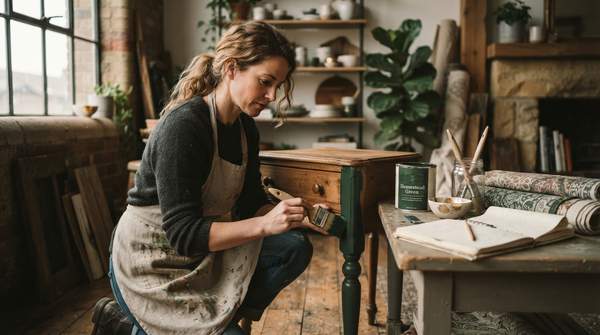
The Science Behind the Stitch: How Crafting Rewires the Brain
An 8-week, 48-hour craft creation practice altered the network structure of mental health variables in a study of 353 university students, as reported by ScienceDirect. This proves sustained creative engagement can lead to tangible changes in brain function related to mental health.
In the same study's intervention group, social well-being negatively correlated with depression and stress. This suggests crafting, especially in group settings, fosters connections that actively mitigate sadness and tension. Moreover, crafts-based interventions positively affect short-term depression, anxiety, stress, and overall mental well-being, according to PubMed. These studies show crafting offers more than temporary relief; it can fundamentally reshape mental health pathways and improve social well-being.
Beyond the Individual: Crafting's Clinical and Community Impact
Art therapy shows positive outcomes for children and adolescents in hospital mental health units, according to UNSW. This confirms its practical application in clinical environments, moving beyond a personal hobby into structured support.
Crucially, art therapy reduced the frequency of seclusion, physical restraint, and sedative injections on a child and adolescent mental health ward, UNSW reported. The reduction in these incidents demonstrates a powerful, practical impact beyond mere emotional regulation. Randomized controlled trials further support art therapy's benefits in youth mental health services. Clinical evidence solidifies crafting's potential as a valuable, non-pharmacological intervention, especially for vulnerable populations like children and adolescents.
Why This Matters Now: Accessible Well-being for All
A study analyzed secondary data from 7,182 adults in England from the Taking Part Survey (a 2019–2020 UK household survey), as detailed in PMC. This extensive dataset proves the broad reach and relevance of creative activities across a large population, not just a niche group.
A systematic review of 19 studies found all reported short-term improvements in outcomes like anxiety, stress, depression, interest in life, self-efficacy, social skills, sociability, mood, well-being, self-esteem, life satisfaction, health-related quality of life, and hopelessness, according to PMC. This wide range of benefits confirms crafting's universal appeal and efficacy as an accessible tool for mental well-being across diverse demographics.
The sheer breadth of these findings underscores a crucial point: mental well-being doesn't always require complex, expensive interventions. Simple, accessible creative outlets offer a powerful, democratic pathway to improved emotional health for virtually anyone, anywhere. This makes crafting a vital, scalable solution for public health.
Addressing the Skeptics: Understanding Research Limitations
What challenges exist in scientifically validating crafting's mental health benefits?
The quality of studies on crafts-based interventions varies, with many suffering methodological weaknesses, according to PMC. Standardizing creative activities for rigorous study is difficult, making universally applicable conclusions challenging despite consistent positive observations.
How can individuals or organizations effectively integrate crafting for improved well-being?
Pro-Tip: Start with short, dedicated periods. Organizations can implement 45-minute creative breaks, shown to physiologically reduce stress. Individuals should set aside consistent daily time for a simple craft, like sketching or knitting, to establish a beneficial routine.
What specific crafting activities are recommended for beginners seeking mindfulness benefits?
Accessible crafts like simple drawing, adult coloring books, knitting, crocheting, or basic origami are excellent starting points. These activities require minimal supplies and offer repetitive, engaging motions that naturally foster focus and reduce mental clutter.
The Bottom Line: Craft Your Way to Calm
If organizations embrace the proven 45-minute creative break, they will likely see significant improvements in employee well-being and stress reduction by Q3 2027.