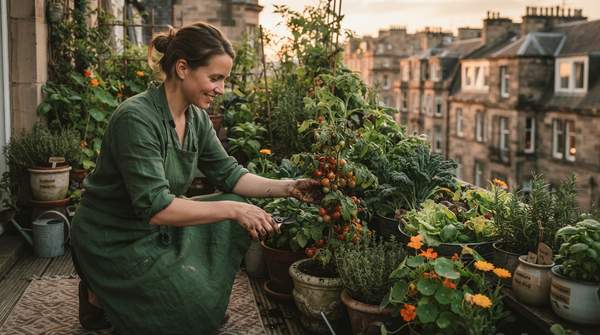
Transforming a small urban balcony into a lush, productive garden is an achievable dream for any homebody. I've found that with thoughtful planning and the right techniques, you can cultivate fresh herbs, vegetables, and flowers, maximizing every inch of your limited space. The secret lies in understanding your specific urban microclimate, selecting appropriate containers and compact plant varieties, and implementing consistent care practices.
Urban environments present unique gardening challenges, such as altered temperatures and specific sun and wind exposures, which differ significantly from rural settings. By systematically assessing these factors and making informed choices, you can create a vibrant balcony garden that not only feeds your family but also enriches your living space, offering a rewarding connection to nature right at home.
Assessing Your Urban Balcony Microclimate
Before selecting a single plant or pot, understanding your balcony's unique microclimate is crucial. I've learned that urban areas often experience average seasonal temperatures that are 3 to 5 degrees Celsius higher than surrounding rural areas. This phenomenon, as noted by Archiproducts, is influenced by the limited presence of vegetation and the widespread use of mineral and concrete surfaces. This temperature difference directly impacts plant selection and watering needs, making it a key factor in your planning.
Sunlight exposure is perhaps the most critical factor for plant growth and yield. City Cultivator recommends tracking your balcony's direct sunlight every two hours for a full day, carefully noting any shadows cast by adjacent buildings or rooflines. This observation allows you to classify your space as full sun (six or more hours), partial sun (four to six hours), or shade (under four hours). This precise understanding of sunlight duration will directly affect which plants will thrive.
Beyond sun and temperature, wind exposure is also an important consideration, according to Garden Design Magazine. Strong winds can dehydrate plants quickly and cause physical damage. Furthermore, before you begin, Garden Design Magazine advises checking with your building owner for any weight restrictions or rules regarding hanging items from railings or walls. Large ceramic containers filled with wet soil can quickly become very heavy, and exceeding weight limits can pose significant safety risks.