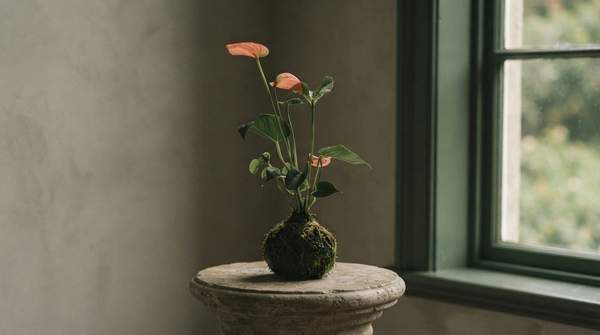
Yes, you can make a kokedama at home in a single afternoon, and you do not need a pot to do it. A kokedama is a Japanese gardening method in which a plant's roots are wrapped in a ball of soil, covered in moss, and bound with string—often suspended in midair like a small green planet. The name comes from the Japanese koke, meaning "moss," and dama, meaning "ball." Though the art form is centuries old, it now takes on a more modern, minimalist form, and it is easy to create and simple to care for once you know the workflow. Here is how to choose your plant, gather your materials, build the ball, and keep it thriving.
Introduction to Kokedama: The Art of Living Moss Balls
Part of what I love about kokedama is how it strips a plant down to its essentials: roots, soil, moss, and string. There is no container to hide behind, which makes the moss ball itself part of the display. Because the plant lives in a constricted environment, every choice you make—from the plant to the soil mix to the string—matters more than it would in an ordinary pot.
One honest caveat before we begin: this guide covers common indoor houseplants only. It does not address outdoor hardy plants or traditional bonsai specimens, and the plant recommendations below reflect the sources gathered here rather than an exhaustive catalog. Within that scope, though, kokedama is a genuinely forgiving project, and string gardens are a lovely way to bring a natural element indoors.