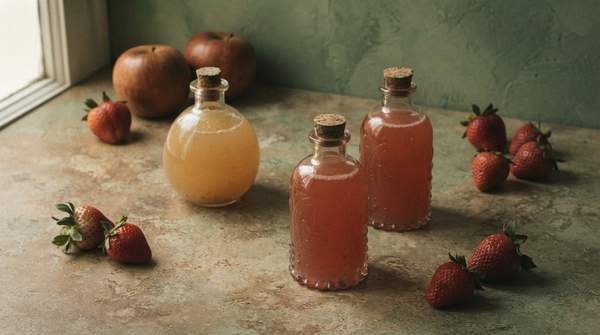
Yes, you can make real vinegar from apple peels, berry tops, or that half bottle of wine you forgot about. You need three things: fruit, sugar, and water — plus patience, because the whole journey takes roughly three to eight weeks. Along the way you'll watch two separate fermentations happen, and I promise the second one smells like victory.
The Two Stages of Vinegar Fermentation
Here's the secret: vinegar is just wine that went one step further. First, yeast eats the sugars in your fruit scraps and produces alcohol — that's alcoholic fermentation. Then acetic acid bacteria consume that alcohol and convert it into acetic acid, which is what makes vinegar taste like vinegar. As fermentation educator Kaitlynn Fenley puts it, to make vinegar at home "you first essentially make wild fermented fruit wine, and then that wine turns to vinegar!"
You can start from either stage. Fruit scraps mean you make the fruit wine yourself first. Leftover wine skips that step entirely — the Institute of Culinary Education notes that home production from wine simply involves a breathable cover, a dark, fairly warm environment (around 77°F), and optionally a splash of unpasteurized vinegar or a "mother of vinegar" to introduce the beneficial bacteria.
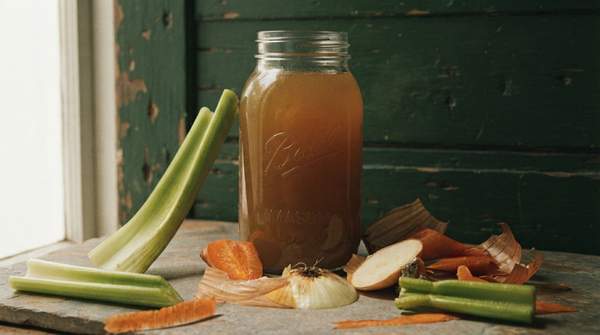
That mother — a gelatinous blob you may spot floating in your jar — is a colony of acetic acid bacteria. It's not gross. It's the workforce. And those microbes need oxygen, which is why a breathable cloth lid matters more than almost anything else in this whole process.
Your Week-by-Week Vinegar Fermentation Timeline
I built this timeline by sequencing the stages, durations, and signs described across several expert guides, so you can check your jar against it and know whether you're on track. One caution up front: duration can vary based on temperature and sugar content, so treat these as typical ranges, not deadlines.
| Stage | Typical Duration | What to Look For | Required Action |
|---|---|---|---|
| Initial setup | Day 1 | Fruit scraps, sugar, and water combined in a clean glass jar; a breathable cloth or coffee-filter lid secured | Ensure all scraps are submerged; add raw vinegar with the mother as an optional starter |
| Alcoholic fermentation | About 1 week | Bubbling; smell shifts from fresh fruit to something alcoholic | Stir daily to keep every scrap coated with liquid and below the surface |
| Straining | Day 7 to 10 | Bubbling slowing; fruit softened | Strain out the fruit chunks and compost them — leaving them in makes a mealy vinegar. This marks the transition to acetic fermentation |
| Acetic fermentation | 2 weeks to 2 months (about a month overall) | A distinct acidic vinegar smell develops; a cloudy sediment or gelatinous "mother" may form — both signs of healthy bacteria | Keep the cloth lid on; stir occasionally; keep in a dark, warm spot |
| Bottling | When acidity tastes right | Sharp, pleasant vinegar aroma; no remaining alcohol harshness | Decant into bottles; filter through a coffee filter if you want it clear |
The single biggest habit for weeks one and two: stir daily, and make sure no fruit floats above the water line. Exposed scraps are where trouble starts.