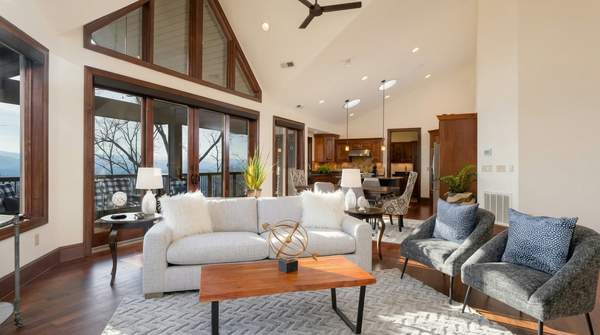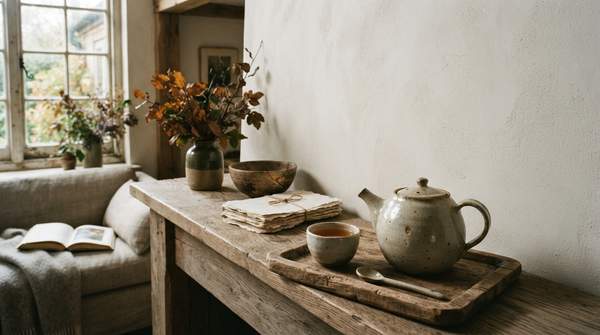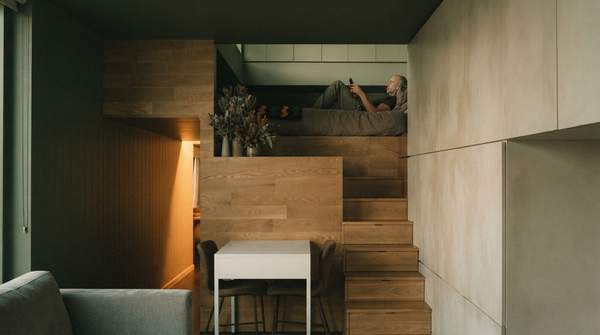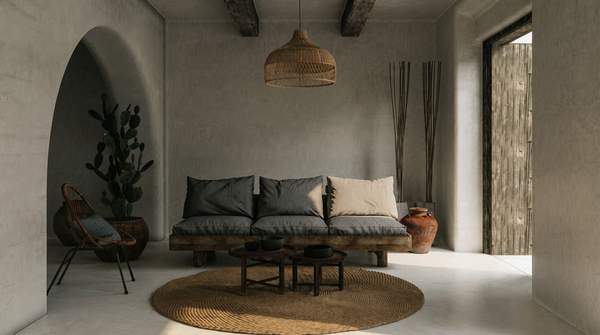
Want a home that genuinely makes you feel better? The answer isn't just "buy more plants." Biophilic design—the practice of weaving nature into the built environment—offers a fuller toolkit, and it sorts neatly into three categories you can act on today: real nature in the room, nature-inspired stand-ins, and the way your space itself is shaped. Terrapin Bright Green's influential report on biophilic design patterns notes that measurable, positive impacts of this approach on health have support in new research, and that the framework was written for anyone wanting to better understand the patterns of biophilia—not only professionals. Here's how to use it in your own living room.
Understanding Biophilic Design: Connecting Your Home to Nature
Biophilic design integrates nature into the built environment through natural light, living plants, organic materials, water features, and nature-inspired patterns, with the aim of improving human health, well-being, and productivity. That's the plain-language summary from an educational guide on the subject, and it holds up at every scale. The approach emerged as urbanization raised awareness that enhancing living spaces with natural elements can counterbalance some adverse effects of modern life, such as stress and disconnection, as a home-styling guide by Leyla Jaworski explains.
Here's the encouraging part for anyone in an apartment or a compact house: it works in small spaces too. Even a small home office benefits from a window plant, natural light, and organic material choices, the same guide notes—the principles scale from a desk to a skyscraper. So no renovation project is required. This article focuses on general principles for homes; it skips large-scale architectural applications and region-specific plant or material picks.
The Three Pillars of Biophilic Design for Your Home
The framework, codified in Terrapin Bright Green's "14 Patterns of Biophilic Design," organizes the human relationship with nature into three experiences. Nature in the Space is direct contact: actual light, air, plants, and water present in the room. Natural Analogues are indirect stand-ins—materials, colors, forms, and patterns that evoke nature without being living things, such as wood furniture or botanical prints. Nature of the Space covers spatial experience itself: views out, cozy refuge within, and the psychological comfort a well-shaped room provides.
Why bother with all three? Because each pillar taps the connection differently. A single potted fern is direct; a linen curtain and a stone countertop are analogues; a reading nook with a window view is spatial design. A balanced mix gives you more routes to the same destination—a home that supports how you live and feel, as designers interviewed for the home-styling guide put it when describing personalized biophilic elements like daylit spaces, organic materials, and strategic plant placements.
Category 1: Direct Nature (Nature in the Space)
This is the most tangible pillar, and often the cheapest to start. Bring actual living and natural elements into the room: houseplants on a windowsill, fresh airflow through open windows, and as much daylight as your glazing allows. Position desks and seating to catch natural light rather than blocking it.
An architectural guide to biophilic homes from Urban Building Workshop lists practical moves that fit here: passive solar strategies to warm spaces naturally, plus low-VOC natural materials that support indoor air quality. Water features belong in this category too—a small tabletop fountain counts. And don't stop at the window line: the same guide suggests designing outdoor spaces that feel integrated with the home, so a balcony or patio planted and furnished as part of the interior extends your direct contact with nature.
Category 2: Indirect Nature (Natural Analogues)
When you can't keep a plant alive or a skylight isn't happening, analogues do the work. These are nature's textures and forms borrowed into objects: wood, stone, and linen are the materials Jaworski's styling guide names as biophilic choices that "calm the senses and invite mindfulness." A timber dining table, a pebble-textured bath mat, a woven basket, a botanical print—each is a cue your senses read as natural.
Think patterns as well as materials. Organic shapes, leaf motifs, and earthy color palettes all signal nature without needing water or sunlight. This is also the pillar where budgets stretch furthest: swapping a plastic chair for a wooden one, or adding a wool throw, changes the tactile character of a room for far less than any structural change. The key distinction is honest—choose real, natural materials where you can, since the low-VOC, air-quality benefit the architectural guide describes comes from the genuine article.
Category 3: Nature of the Space (Spatial Experience)
The subtlest pillar shapes how a room feels. Terrapin Bright Green's framework includes spatial patterns tied to views, refuge, and our response to environment—loosely, the balance between prospect (openness and outlook) and refuge (shelter and coziness). At home, that translates to two moves: maximize what you can see, and create somewhere to hide.
Practically, keep window views clear—arrange furniture so the garden, street trees, or sky are visible from where you sit. Then build a restorative nook: a corner chair, a soft lamp, a view nearby. The architectural guide frames this as homes that respond to their specific site and surroundings, noting that a home connected to its place "is what gives a home its soul." Your version might be as simple as a window seat. What matters is that the space offers both outlook and retreat, which is what this pillar is fundamentally about.
Your Biophilic Home Design Checklist
Use this matrix to audit each room and pick one intervention per category. The reasoning: each pillar reaches your well-being through a different channel—sensory contact, material cues, and spatial psychology—so a balanced mix covers more ground than doubling down on any one.
| Category | What it means | Try this at home | What it targets |
|---|---|---|---|
| Direct Nature (Nature in the Space) | Real natural elements physically present: light, air, plants, water | Add houseplants; maximize natural light; improve airflow; add a small water feature; connect a balcony to the interior | Living, sensory contact with natural processes |
| Indirect Nature (Natural Analogues) | Nature-evoking materials, forms, and patterns that aren't living things | Wood and stone surfaces; linen and wool textiles; nature-inspired colors, shapes, and prints | Visual and tactile cues that read as natural |
| Nature of the Space | Spatial organization and psychological response: views, refuge, place | Clear the window views; create a cozy nook; arrange rooms to face the outdoors and respond to your surroundings | Feelings of safety, outlook, and rootedness |
Start with whichever row feels weakest. A plantless, synthetic-furnished room with a great view is a Category 1 and 2 project; a plant-filled room that faces a blank wall is a Category 3 one. The goal is never perfection—it's a deliberate selection across all three.
Enhancing Well-being: The Benefits of a Biophilic Home
Why go to the trouble? The wellness case is the most compelling part of this framework. A biophilic home can lower stress and anxiety, improve sleep quality through better light regulation, and enhance focus and productivity in work-from-home settings, according to the architectural guide, which also points to calm, restorative spaces where families can reconnect. Jawarski's styling guide names the same levers—natural light, plants, and air circulation—to lower cortisol and improve mood.
There are multi-platform benefits beyond psychology, too. As Terrapin Bright Green's report emphasizes, the approach raises the priority of the human-nature connection within design research and practice because of its measurable impacts on health, and thoughtful application contributes to overall building performance—thermal comfort, acoustics, and indoor air quality are all cited as beneficiaries of natural materials and good light. One reported example in the styling guide: an urban home featuring extensive use of natural materials saw a 20% improvement in occupants' mood. That's an anecdote from a single featured home, not a controlled study—but it points in the same direction as the broader evidence.
Making Your Home a Natural Sanctuary
The decision is simple: implement a balanced mix of direct nature, indirect nature, and nature of the space strategies to enhance well-being. Pick one item from each row of the matrix this weekend—a plant, a natural-material swap, a cleared view or new nook—and you've covered all three channels at once.
Then track it. Observe changes in personal mood, stress levels, and overall comfort within the home environment over the weeks that follow. If your evening wind-down feels easier in the new reading corner, or the daylit desk sharpens your focus, you've seen the framework working in your own space—and you'll know exactly which category to invest in next.
Sources
- 14 Patterns of Biophilic Design — Terrapinbrightgreen
- Biophilic Design: Principles, Benefits and Examples — Learnbiomimicry
- Biophilic Design in the Home: Creating Calm, Connection, and Natural Balance — The Shop by Design Shop
- The Ultimate Guide: How Biophilic Design Creates Healthier Homes — UBW-Live