Wabi-sabi decor comes down to three practical pillars: choose raw, natural materials such as wood, stone, clay and linen; display items that carry visible flaws, wear and history rather than hiding them; and arrange your space with asymmetry, simplicity and organic forms instead of perfect symmetry. The Interior Design Institute describes wabi-sabi as an ancient Japanese philosophy that asks us to find contentment in our environments as they are, celebrating "the beauty of aging and the allure of the naturally imperfect." That mindset translates into a concrete checklist you can work through room by room.
Embracing Wabi-Sabi: The Art of Imperfect Living
In a fast-paced, perfection-driven world, wabi-sabi offers a deliberate counterpoint for the home. Rather than chasing flawless surfaces and showroom polish, this approach values what is authentic and lived-in. The Interior Design Institute frames it as a calming antidote to perfectionism: interiors that show natural wear and understated textures create a serene, grounded atmosphere where functionality and emotional comfort coexist. Practically, that means curating fewer objects, accepting the marks time leaves on them, and letting the space feel connected to nature rather than styled to impress.
Understanding Wabi and Sabi: Core Principles for Your Home
The two halves of the term carry distinct meanings. Fleur Studios defines "wabi" as living with humility, simplicity and a profound connection to nature, while "sabi" embraces the natural cycle of existence, flaws and all. Together they form a way of life rather than a set of strict rules—one that calls for patience and a letting go of perfection. For decor decisions, "wabi" guides you toward simple, honest materials and uncluttered spaces, while "sabi" encourages you to keep pieces that show their age and let their stories remain visible. Every choice below flows from one of those two ideas.
Pillar 1: Select Natural and Authentic Materials
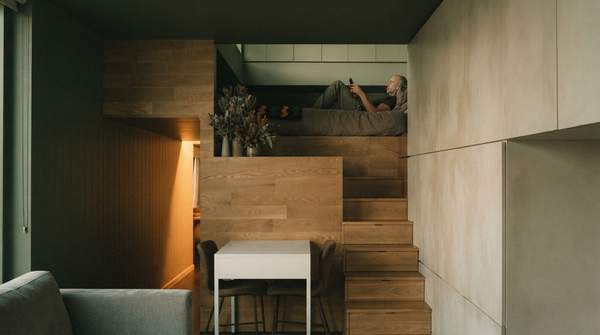
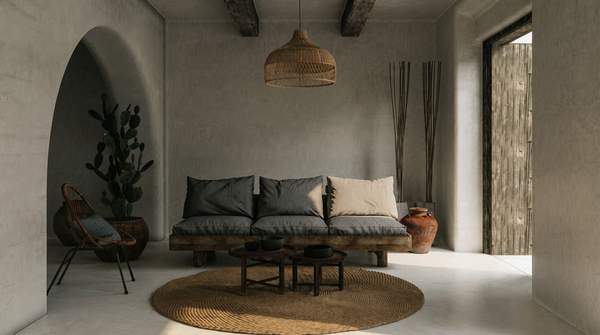
Start with what things are made of. Wabi-sabi favors raw, organic materials—wood, stone, clay, linen, cotton and wool—chosen for their natural textures and their ability to age gracefully. Rough wood, unpolished stone and soft textiles layered together add depth and comfort while keeping the room honest and unpretentious. Earthy hues and neutral tones provide a serene backdrop that lets those textures stand out, and plants bring a touch of nature indoors. Natural light matters too: minimal window treatments and strategically placed mirrors let light enhance the materials in the room rather than compete with them.
Pillar 2: Embrace Imperfection and the Beauty of Age
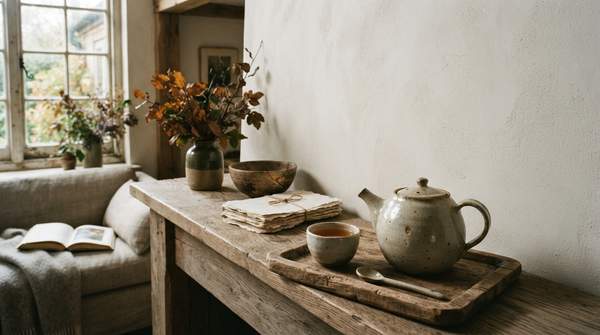
Where conventional decorating might replace or hide a damaged piece, wabi-sabi displays it. Chipped pottery, worn textiles, cracks and tears are treated as records of the passage of time—Heju Studio founders Hélène Pinaud and Julien Schwartzmann, quoted by Fleur Studios, note that such materials "will live over time—this patina will only make them more beautiful." Opt for handmade or vintage items, which carry character and history that identical mass-produced pieces cannot. The test for any object is simple: does its flaw tell a story you want in your home? If yes, it belongs on the shelf rather than in the bin.
Pillar 3: Create Balance Through Asymmetry and Simplicity
Tranquility in wabi-sabi comes from restraint, not from matching sets. Declutter to achieve a calm, open space, and keep furniture simple and functional—minimalist design with a calm, understated aesthetic that encourages mindfulness and reflection. Instead of centering artwork perfectly or pairing identical chairs, choose arrangements that feel spontaneous and relaxed: off-center artwork, mismatched furniture and organic, irregular shapes. The goal is an imperfect balance, where the room feels harmonious precisely because it is not rigidly symmetrical. As Fleur Studios puts it, wabi-sabi focuses on the way things are, rather than the way they should be.
Your Wabi-Sabi Home Decor Checklist
Work through these actions in order—they move from choosing what enters your home, to accepting its flaws, to arranging it all with intentional imperfection.
- Choose natural materials. Prioritize wood, stone, clay, linen, cotton and wool, selected for authentic textures and graceful aging.
- Layer textures. Combine rough wood, unpolished stone and soft textiles; balance the layers so the room feels inviting rather than busy.
- Opt for handmade or vintage items that add character and carry a visible history.
- Display imperfections. Keep chipped pottery, worn textiles and natural flaws on show, and let them tell their story.
- Set a serene backdrop. Use neutral tones and earthy hues, and keep furniture simple and functional.
- Declutter. Remove everything non-essential to achieve a calm, open space.
- Arrange asymmetrically. Hang artwork off-center, mix mismatched furniture, and choose placements that feel spontaneous and relaxed.
- Bring in nature and light. Add plants, minimize window treatments, and position mirrors so light enhances the room's textures.
Cultivating Serenity: The Enduring Value of Wabi-Sabi
Embrace wabi-sabi principles by mindfully selecting natural materials, celebrating imperfections, and designing with asymmetry and simplicity. The payoff is a living space that feels serene, authentic, and connected to nature, where objects tell stories and evoke contentment. Rather than a finished look, treat it as an ongoing practice: each time you choose a worn wooden bowl over a flawless one, or hang a picture slightly off-center and leave it there, you are trading perfection for peace. That is the measurable result—rooms where, as The Interior Design Institute puts it, functionality and emotional comfort genuinely coexist.